Ditch the Cereal: Why South Indian Breakfast Might Be the Healthiest Morning Upgrade You Haven't Tried Yet
What If Breakfast Was Actually Good for You?
Let's be honest about the average American breakfast. Even when we're trying to do right by our bodies, we often end up with something highly processed, loaded with added sugar, or so calorie-dense that we're sluggish before we even make it to the first meeting of the day. Overnight oats are fine. Protein shakes do their job. But there's a whole breakfast tradition from South India that has been quietly delivering everything we claim to want from a morning meal — protein, probiotics, complex carbohydrates, and actual flavor — for literally thousands of years.
We're talking about idli, dosa, and uttapam. If you've never made them at home, this guide is your starting point.
The Fermentation Factor: Why These Foods Are Genuinely Good for You
Before we get into recipes, it's worth understanding why South Indian breakfast foods have earned their reputation as genuinely nutritious — not just in the trendy wellness-blog sense, but in the measurable, science-backed sense.
The base for idli and dosa is a batter made from soaked and ground rice and urad dal (black lentils), which is then left to ferment overnight. That fermentation process is where the magic happens. Beneficial bacteria break down the starches and proteins, making the nutrients more bioavailable and producing natural probiotics that support gut health. The same biological process that makes yogurt and kimchi good for your digestive system is at work in a properly fermented idli batter.
The protein content is also worth noting. Urad dal is a strong plant-based protein source, and when combined with rice, it forms a more complete amino acid profile than either ingredient provides on its own. A serving of three idlis clocks in at roughly 6–9 grams of protein, is low in fat, and contains virtually no added sugar. Compare that to a bowl of most name-brand cereals, and the case makes itself.
Uttapam — a thicker, pancake-style variation topped with onions, tomatoes, and chilies — adds even more vegetable-based nutrients to the equation. And dosa, particularly the masala variety filled with spiced potatoes, delivers a satisfying, energy-sustaining meal that won't send your blood sugar on a roller coaster.
A Beginner's Guide to Making the Batter
The batter is the foundation of all three dishes, and while it requires some advance planning, the hands-on effort is minimal.
What You'll Need:
- 2 cups idli rice (or parboiled rice)
- 1 cup whole urad dal
- 1 teaspoon fenugreek seeds
- Salt to taste
The Process:
Rinse the rice and dal separately, then soak them in water for at least 6 hours — overnight works perfectly if you start before bed. Soak the fenugreek seeds with the dal.
Drain the soaked dal and blend it first, adding water gradually until you get a light, fluffy consistency. It should almost double in volume as you blend — that aeration is important. Blend the rice separately until smooth but with a slightly coarser texture than the dal.
Combine the two in a large bowl, add salt, mix well, and cover loosely. Leave it at room temperature to ferment. In a warm kitchen (75–85°F), this takes about 8–12 hours. If your home is on the cooler side — common in many parts of the US, especially in winter — you can place the bowl in an oven with just the light on, which generates enough warmth to kick off fermentation.
You'll know it's ready when the batter has risen noticeably and smells pleasantly tangy.
Three Dishes, One Batter
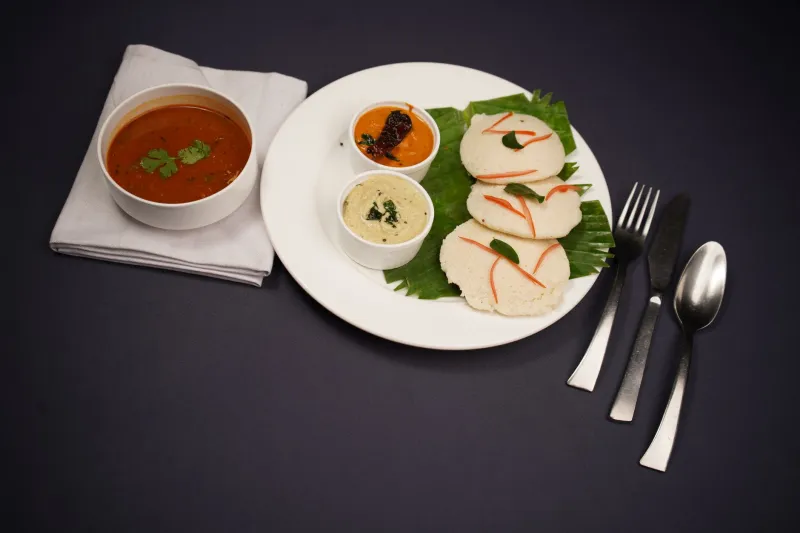
Idli is the simplest application. Pour the batter into greased idli molds and steam for about 10–12 minutes. The result is soft, pillowy rounds that pair beautifully with sambar and coconut chutney. They're gentle on the stomach, easy for kids to eat, and hold up well in a lunchbox if you want to prep them the night before.
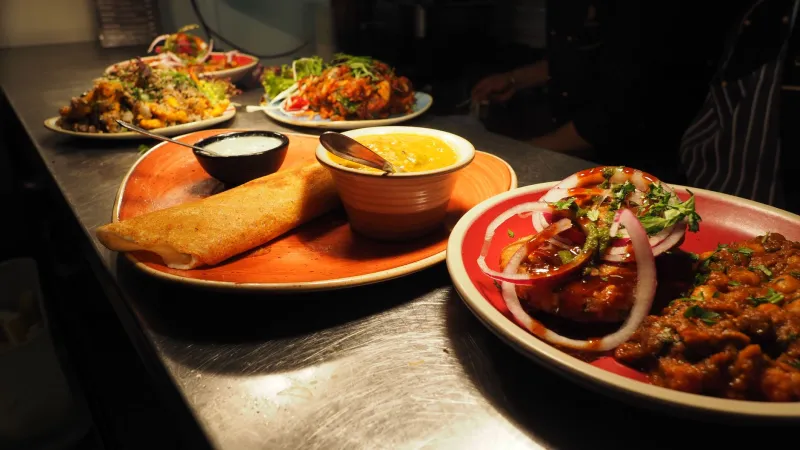
Dosa requires a hot, well-seasoned cast iron or non-stick griddle. Pour a ladleful of batter onto the hot surface and spread it in a circular motion, working outward from the center. Drizzle a little oil or ghee around the edges and let it cook until the bottom is golden and crisp. Fold and serve. For masala dosa, add a filling of spiced mashed potatoes before folding — a recipe we'll cover in a dedicated post soon.
Uttapam uses the same batter but stays thicker. Pour without spreading too thin, then immediately press chopped onions, tomatoes, green chilies, and cilantro into the surface. Cook covered for a couple of minutes, flip, and finish on the other side. It's more forgiving than dosa and a great option when you're still getting comfortable with the griddle technique.
Meal Prepping South Indian Breakfast for a Busy Week
Here's the practical reality: most of us don't have time to make fresh batter on a Wednesday morning. The good news is that South Indian breakfast is actually one of the most meal-prep-friendly cuisines out there.
Batter keeps in the refrigerator for up to a week. Make a large batch on Sunday evening, and you have the base for every morning breakfast sorted. The batter may continue to ferment slightly in the fridge, which actually deepens the flavor over time.
Idlis can be made in bulk and refrigerated or frozen. Reheat in a steamer or microwave with a damp paper towel for a quick weekday morning. They reheat beautifully and taste nearly identical to fresh.
Sambar freezes exceptionally well. Make a big pot on the weekend, portion it into containers, and pull one out each morning. Reheat on the stovetop or in the microwave.
Chutneys stay fresh for 3–4 days. Coconut chutney is the classic pairing, but tomato chutney and peanut chutney are equally delicious and slightly easier to keep.
Where to Source Ingredients in the US
Idli rice and urad dal are the two items most people struggle to find at a standard grocery store. Here's where to look:
- Indian grocery stores are your best first stop. Most mid-sized American cities have at least one, and they'll carry everything you need including idli rice, urad dal, fenugreek seeds, and fresh curry leaves.
- Online retailers like Amazon, iShopIndian, and Patel Brothers' online store carry a wide range of South Indian pantry staples with reliable shipping across the US.
- Some international aisles at larger grocery chains like Walmart Supercenter or Kroger carry basic lentils and sometimes parboiled rice, which can work in a pinch.
If sourcing ingredients feels like too much of a hurdle to start, Srirangam Bhojnam offers freshly prepared idli, dosa, and uttapam for delivery — so you can taste what you're working toward before you commit to making it yourself.
A New Morning Ritual Worth Adopting
There's something grounding about a breakfast with this much history behind it. Generations of South Indian families have started their mornings with these same flavors — the tang of fermented batter, the warmth of sambar, the cooling freshness of coconut chutney. It's a meal that's been refined over centuries, and it shows.
You don't need to overhaul your entire morning routine at once. Start with idli on the weekend when you have a little more time. Get comfortable with the batter. Work up to dosa. Before long, you might find yourself looking forward to mornings in a way that no protein shake ever quite managed.