Chain Restaurants Had Their Chance. American Families Are Moving On.
For a long time, the American weeknight dinner equation was pretty settled. You either cooked from scratch, ordered a pizza, or surrendered to whatever meal-kit subscription was currently guilt-tripping you from the fridge. Fast casual chains filled the gap — reliable, recognizable, and just good enough that nobody complained too loudly.
But something is shifting. And it's showing up in an unexpected place: South Indian food delivery.
The Fast Casual Fatigue Is Real
Talk to parents of school-age kids in any mid-sized American city and a pattern emerges fast. The burrito bowl that seemed exciting in 2016 has become background noise. The meal kit that promised to make you feel like a home cook mostly just makes you feel like you're doing dishes for a restaurant you didn't choose. And the nutritional math on a lot of fast-casual staples — once you actually run it — doesn't hold up as well as the branding suggests.
What families are looking for now isn't just speed. It's speed plus something worth eating. That's a harder problem than it sounds, and most of the usual options only solve half of it.
South Indian food, it turns out, solves both.
What Makes South Indian Delivery Different
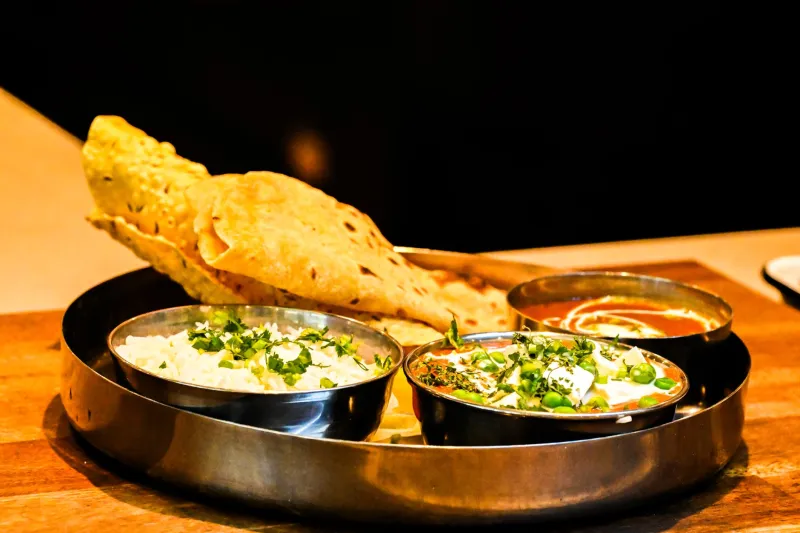
Let's be direct about what's actually on the plate. A typical South Indian meal — say, sambar rice with a side of rasam, some papad, and a small portion of a vegetable poriyal — is built on a foundation of lentils, tamarind, tomatoes, and a rotating cast of vegetables. The spicing is complex but not aggressive. The protein-to-carbohydrate balance is genuinely solid. And the meal is almost always made from whole ingredients that haven't been processed into some beige middle ground.
For parents who've spent years trying to sneak nutrition past picky eaters, there's something almost disarming about a dish like kootu — a thick, coconut-laced vegetable-and-lentil preparation that tastes rich enough to feel like a treat while quietly delivering fiber, plant protein, and a surprising range of micronutrients. Kids who won't touch a salad will sometimes eat their way through a bowl of this without negotiating.
And the delivery experience from a place like Srirangam Bhojnam is structured in a way that maps naturally onto how families actually eat. You're not ordering individual items off a menu that doesn't add up to a meal. You're ordering a thali — a composed spread where everything connects. Rice, dal, a couple of sides, something pickled, something sweet. It arrives as a complete dinner, not a pile of components you have to assemble at 7 p.m. while someone's doing homework on the kitchen table.
The Weekly Meal Planning Shift
What's interesting is how this is changing the structure of meal planning itself, not just the individual dinner decision.
A lot of families who've gotten into South Indian delivery describe a similar evolution. It starts as a Friday thing — a reward after a long week, a break from cooking. Then it moves to Tuesday because Tuesday is always the hardest day. Then someone starts looking at the menu on Sunday while planning the week, and suddenly South Indian food has a permanent slot in the rotation alongside whatever else is happening.
The dishes hold up well. Sambar reheats better than almost any Western equivalent. Rice-based meals don't get soggy the way pasta dishes do. Chutneys and pickles — which often come alongside a full delivery order — can be repurposed across multiple meals during the week. Families start treating a single delivery order less like takeout and more like a batch-cooking session they didn't have to do themselves.
That's a meaningful shift in how people are thinking about convenience. It's not just 'I don't want to cook tonight.' It's 'I want this meal to do more work for me than one dinner.'
What This Says About Where American Eating Is Headed
There's a broader cultural story here. American food culture has been running a quiet experiment for the last decade — slowly testing whether people actually want authenticity or just the performance of it. Meal kits performed authenticity. 'Farm-to-table' fast casual performed it. A lot of the wellness food industry performs it at significant markup.
South Indian cuisine doesn't perform anything. It has centuries of culinary logic behind it — built around seasonal vegetables, legumes, fermented foods, and spice combinations that weren't invented for a brand identity. When you order from a restaurant that takes that tradition seriously, you're getting the real version, not a simplified American interpretation designed to be inoffensive.
Families are noticing. The conversation around 'ethnic food' in America has changed considerably — there's less of the old condescension, more genuine curiosity. Parents who grew up eating pad thai from a strip mall are raising kids who want to understand what they're eating and where it comes from. South Indian food, with its regional specificity and its visible logic (why is this sour? because tamarind. why is this dish yellow? because turmeric and dal), gives curious eaters something to actually engage with.
The Convenience Reframe
Here's the thing about convenience that the fast-casual industry never quite figured out: it isn't just about time. It's about how you feel after. A meal that arrives quickly but leaves you vaguely unsatisfied — or worse, vaguely guilty — isn't actually convenient. It just moved the problem to a different part of the evening.
A South Indian meal that arrives in 40 minutes, feeds four people with leftovers, introduces a kid to tamarind for the first time, and generates zero post-dinner regret? That's a different kind of convenience entirely. That's the kind families are starting to organize their weeks around.
Chain restaurants had a long run. They solved a real problem. But the problem has evolved, and the solution has too.