Forget the Quinoa Bowl: How South Indian Rice Dishes Became the Unlikely Antidote to American Burnout
Somewhere between the third Zoom call and the fifth Slack notification, Maya Krishnamurthy started making lemon rice on Tuesday afternoons. Not for lunch. Not for meal prep. Just — to make it.
"There's this moment when the mustard seeds hit the hot oil," she says, laughing a little at herself. "Everything goes quiet in my head right before they pop. I started looking forward to that quiet more than the food."
Maya, a product manager in Austin, Texas, is not alone. Across the country, a quiet but unmistakable shift is happening in home kitchens — and in the growing number of South Indian restaurants and delivery services seeing unusual midweek order spikes. People are turning to traditional South Indian rice dishes not just as dinner, but as a kind of reset button. And food culture is starting to pay attention.
What's Actually in These Dishes (And Why That Matters)
Let's be clear about what we're talking about. South Indian rice preparations aren't complicated in the way that, say, a French braise is complicated. They're precise. They're rhythmic. And they rely on a remarkably short list of ingredients that punch well above their weight.
Take lemon rice — chitranna in Kannada, elumichai sadam in Tamil. Cooked rice gets tempered with mustard seeds, dried red chilies, curry leaves, turmeric, and a generous squeeze of fresh lemon. That's more or less it. The result is bright, a little tangy, faintly sharp, and deeply satisfying in a way that's hard to explain until you've eaten it.
Tamarind rice — puliyodarai — goes deeper. Tamarind paste, sesame seeds, peanuts, a spice blend that often includes dried chilies and coriander. It's sour and a little funky and complex in the way that slow cooking makes things complex, even though the active work takes maybe twenty minutes.
Ghee rice is the quietest of the three. Fragrant basmati cooked with clarified butter, whole spices — cardamom, cloves, a bay leaf — and sometimes caramelized onions. It smells like a celebration but eats like a hug.
Nutritionally, these dishes aren't slouches either. Turmeric brings anti-inflammatory curcumin. Curry leaves are loaded with antioxidants. Tamarind is rich in tartaric acid and has a long history in Ayurvedic digestion support. Ghee, once demonized by American dietitians, has been quietly rehabilitated as a source of healthy fats and fat-soluble vitamins.
"What I find interesting from a nutritional standpoint," says registered dietitian Priya Nair, who works with South Asian clients in the Chicago area, "is that these dishes were designed for sustained energy and digestive ease. They're not exciting in a flashy way. They're grounding. And I think that's exactly what a lot of people need right now."
The Ritual Is the Point
Here's the thing about making tamarind rice from scratch: you can't rush it. The tamarind has to soak. The paste has to cook down. The tempering has to bloom properly — and if you've ever let curry leaves go into cold oil, you know the difference.
That enforced slowness, food therapists and mindfulness practitioners are starting to suggest, might be part of the appeal.
"Repetitive, sensory-focused tasks are genuinely calming for the nervous system," explains Dr. Anita Sood, a licensed therapist in the Bay Area who has started incorporating what she calls 'kitchen anchoring' into her work with clients experiencing anxiety. "The sound of mustard seeds crackling, the smell of curry leaves hitting hot oil — these are multisensory cues that bring you into the present moment. It's not so different from what happens in formal meditation, honestly."
The comparison to meditation isn't just poetic. The focused, repetitive nature of tempering spices — watching, listening, adjusting heat — requires a kind of attention that crowds out rumination. You can't catastrophize about your quarterly review when you're trying to keep curry leaves from burning.
This stands in sharp contrast to the way most American wellness culture approaches food. Smoothie bowls get assembled in ninety seconds. Grain bowls are meal-prepped in bulk. Even the quinoa that South Indian rice is quietly displacing from some households tends to be cooked and forgotten in a rice cooker. The process is optimized out of existence.
South Indian rice dishes resist that optimization. And increasingly, people seem grateful for it.
Why Quinoa Lost the Plot
Quinoa had a good run. It arrived in American health food consciousness sometime around 2010 with impressive credentials — complete protein, gluten-free, Andean superfood pedigree — and promptly colonized every grain bowl from Portland to Miami.
But something happened. Quinoa became associated with a certain kind of effortful wellness that started to feel exhausting. It required a narrative. It needed to be part of a "macro-balanced" meal. It sat in containers in the fridge, virtuous and slightly sad.
Rice, meanwhile, was being quietly reconsidered. Not just white rice-as-villain reconsidered, but rice-as-vehicle reconsidered. Rice as the thing that carries flavor, absorbs spice, grounds a meal.
"South Indian cuisine has always understood that rice isn't a blank slate — it's a partner," says chef Suresh Venkataraman, who runs a catering operation out of the Dallas area. "When you make puliyodarai, the rice absorbs the tamarind and the spice over time. It gets better as it sits. It's the opposite of something you eat immediately and forget."
That staying power — both literally and metaphorically — is resonating with American home cooks who are, in many cases, discovering these dishes through delivery orders before attempting them at home.
The Gateway Effect
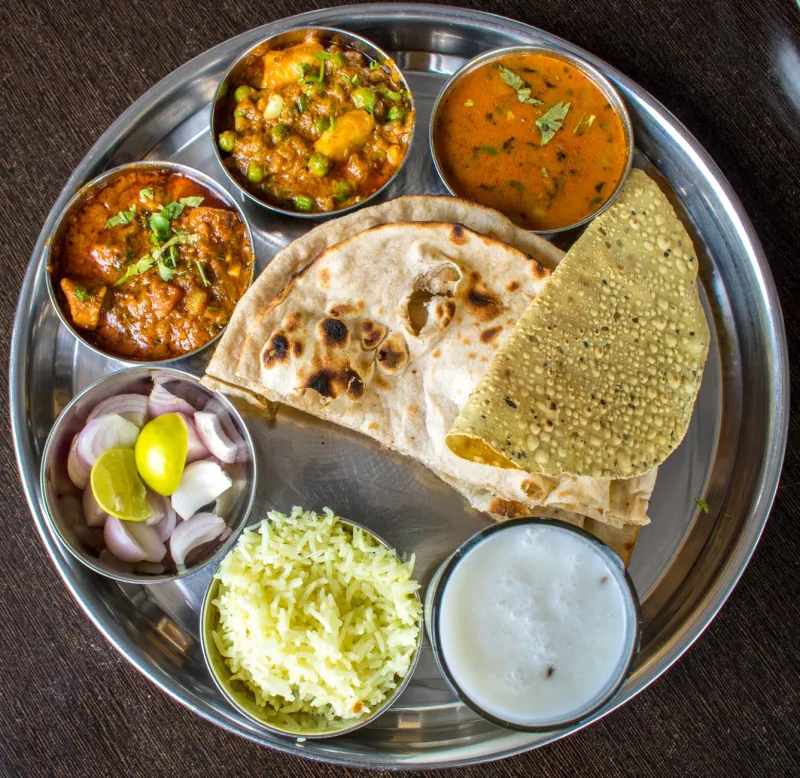
Food delivery has played a quiet but significant role in this trend. When someone orders a South Indian thali and encounters a small portion of lemon rice alongside sambar and a curry, something often clicks. The rice isn't a filler. It's a distinct, considered thing with its own flavor profile.
That recognition — oh, this is a dish, not just a base — frequently sends people to YouTube tutorials and family recipe blogs. And from there, to the kitchen.
"I ordered tamarind rice on a whim about a year ago," says Daniel Okafor, a high school teacher in Atlanta. "I'd never had it before. I couldn't stop thinking about it, so I looked up how to make it. Now I make it almost every weekend. My kids ask for it. My wife asks for it. It's become a thing in our house."
Daniel's family is Black American with no South Indian heritage. His relationship to the dish is entirely about flavor and feeling. "It's just really satisfying to make," he says. "And it tastes like it took way more effort than it did."
Slow Down, Eat Something Real
There's a broader conversation happening in American food culture about what we actually want from eating — not just nutritionally, but experientially. The optimization era, with its macros and meal kits and two-minute prep times, is showing cracks. People are hungry for something that asks a little more of them, and gives a little more back.
South Indian rice dishes, with their unhurried preparation, their sensory specificity, and their deep roots in a food tradition that has always valued the relationship between cooking and well-being, seem to be arriving at exactly the right moment.
The silence before the mustard seeds pop is short. Maybe three seconds. But for a lot of people right now, it's the most peaceful three seconds of the day.
And that, honestly, is reason enough to start a pot of rice.