Where Every Recipe Began: The Ancient Temple Kitchen That Still Feeds South Indian Food Culture
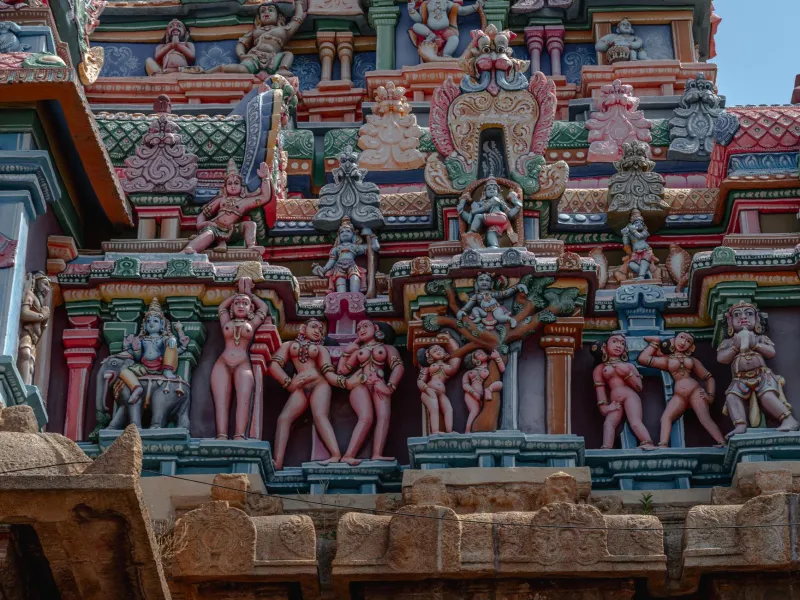
There's a reason our name is Srirangam Bhojnam. Bhojnam means meal — a sacred, communal act. And Srirangam, the ancient temple town on an island in the Kaveri River in Tamil Nadu, is where that act was codified into something that has lasted centuries. If you've ever wondered why South Indian cooking feels so deliberate, so layered, so rooted — a big part of that answer lives inside those temple walls.
The Sri Ranganathaswamy Temple is one of the largest functioning Hindu temple complexes in the world. At its peak, it fed thousands of pilgrims every single day. That wasn't a logistical accident. It was a system — one built on specific ingredients, strict preparation methods, and a deeply held belief that food cooked with intention carries something beyond nutrition.
What came out of that kitchen didn't stay inside the temple. It traveled. Through generations of Tamil Brahmin cooks, through immigrant families who packed their spice tins alongside their documents, all the way to apartment kitchens in New Jersey, California, and Texas. When you taste a properly made kootu or a rasam that hits every note — tart, peppery, fragrant — you're tasting something with a very long memory.
The Temple Kitchen Wasn't Just Cooking — It Was Doctrine
Temple kitchens in South India, called mathapaLi or more commonly associated with the devasthanam kitchen system, operated under a code that would look foreign to most modern cooks. Every ingredient had a place in a hierarchy. Certain foods were considered sattvic — pure, calming, spiritually elevating. Others were excluded entirely. No onion. No garlic. No meat, obviously. What remained was a pantry that sounds restrictive until you realize how much flavor it managed to produce anyway.
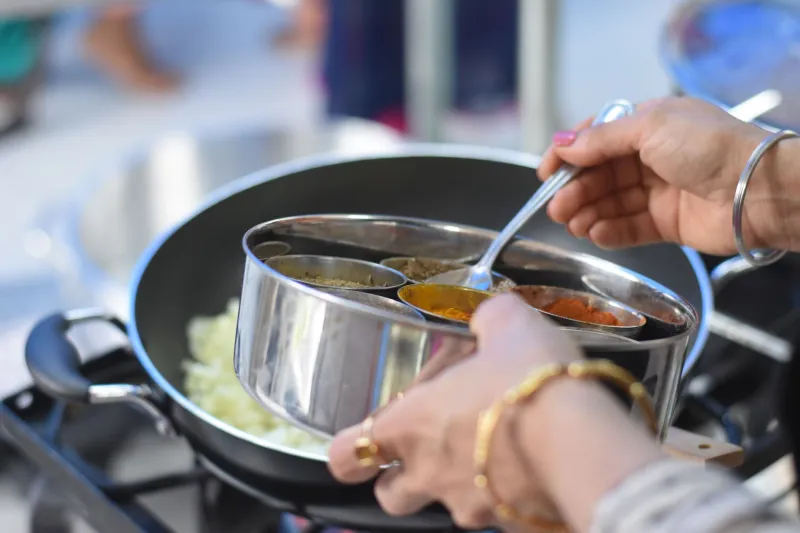
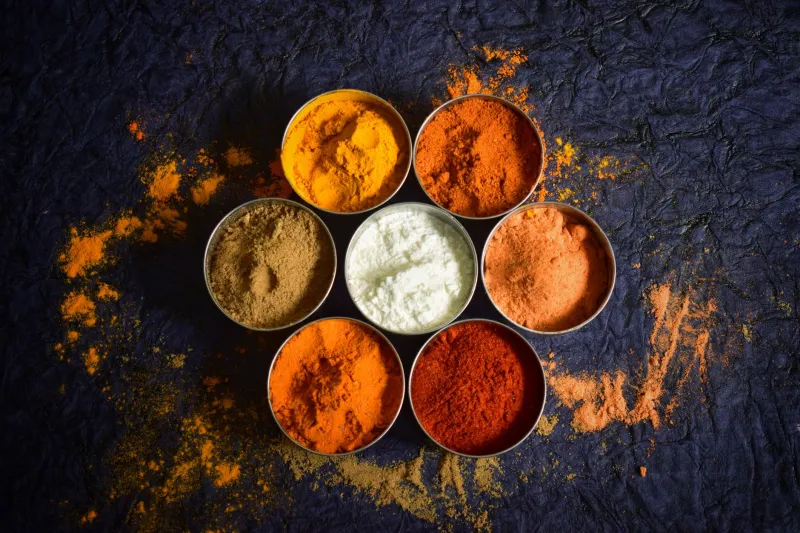
Asafoetida — that pungent, sulfurous resin that Americans are just now discovering through wellness circles — was the workaround. A pinch of it bloomed in hot oil performs the same aromatic function as garlic, without crossing the line. Curry leaves, dried red chilies, mustard seeds popped in ghee: these weren't garnishes. They were the architecture. Temple cooks understood that flavor is built in sequence, not dumped in at once.
Tamarind provided the sourness that makes South Indian food so distinctive. Coconut — fresh, dried, pressed into milk — gave richness without relying on dairy in every dish. Lentils in their many forms (toor, urad, chana, moong) served as protein, thickener, and flavor base all at once. The temple kitchen essentially invented a complete culinary grammar using ingredients that could be sourced locally, stored without refrigeration, and prepared in enormous quantities without losing their integrity.
Feeding as a Sacred Act
Here's what sets the Srirangam temple kitchen apart from just being a large cafeteria: the concept of annadanam. Translated literally, it means "the gift of food." In practice, it means that feeding someone — anyone — is one of the highest acts of devotion a person can perform. You weren't cooking for customers. You weren't cooking to show off. You were cooking as an offering, which meant the food itself had to be worthy of that intention.
This philosophy shaped everything. The rice had to be cooked just right — not mushy, not firm, but that specific yielding softness that holds up under a ladleful of sambar. The sambar itself had to be balanced: not too sour, not too spicy, the lentils present but not dominant. The chutneys had to provide contrast. Every element on the leaf (yes, a banana leaf — another temple tradition that became a cultural staple) served a purpose.
This isn't nostalgia. It's functional design. And it's why South Indian food, when it's made properly, feels complete in a way that's hard to articulate but immediately recognizable.
What Immigrant Families Carried Across the Ocean
When Tamil families began emigrating to the United States in larger numbers — particularly after the Immigration Act of 1965 opened new pathways — they brought this cooking culture with them. Not always consciously. Sometimes it was just the habit of tempering mustard seeds before anything else went into the pot. Sometimes it was the insistence on cooking rice a certain way, or the refusal to substitute canned coconut milk for fresh-grated coconut in certain dishes.
But underneath those habits was the Srirangam model: food as care, cooking as practice, the kitchen as a place where you don't cut corners because the people eating deserve better than corners.
For many second-generation Indian Americans, these cooking rituals were the thread connecting them to a place they'd never lived. A grandmother's kootu recipe. The smell of asafoetida hitting hot ghee on a Sunday morning. The way a proper rasam clears your sinuses and somehow also makes you feel emotionally okay again. These weren't just meals. They were transmissions.
Why This Still Matters When You Order Delivery
You might be wondering what a 16th-century temple kitchen has to do with ordering South Indian food on a Tuesday night in suburban Chicago. More than you'd think.
Authenticity in South Indian cooking isn't about using the fanciest ingredients or following a recipe to the letter. It's about understanding why things are done a certain way. Why the tempering comes first. Why tamarind isn't interchangeable with lemon juice. Why the balance of a meal — rice, dal, vegetable, pickle, papad — isn't arbitrary but deeply considered.
When a South Indian restaurant or food service gets it right, you can feel it. There's a coherence to the meal that goes beyond taste. It feels like someone thought about you before you arrived, which is essentially what the Srirangam temple kitchen was doing for pilgrims who had walked for days just to get there.
That's the tradition we're drawing from. Not as a marketing angle, but as a genuine north star for what South Indian cooking can be when it's taken seriously.
The Living Kitchen
The Srirangam temple still operates its kitchen today. Thousands of meals are still served. The recipes haven't changed dramatically in centuries, not because no one thought to update them, but because they don't need updating. They were built to last.
That's the quiet confidence of South Indian cooking at its best. It doesn't chase trends. It doesn't need to. It already figured out, a very long time ago, that a meal cooked with good ingredients, honest technique, and genuine care for the person eating it is as good as food gets.
We named this site after that idea. Every dish we talk about, every recipe we share, every order we help you place — it's all connected back to that kitchen on the island in the Kaveri River, where someone a very long time ago decided that feeding people was worth doing right.