One Tin to Rule Them All: How American Home Cooks Are Finally Building the South Indian Spice Kit They Actually Need
There's a particular kind of frustration that comes from following a South Indian recipe and knowing, somewhere deep in your gut, that something is off. The sambar tastes flat. The tempering lacks that sharp, aromatic pop. The dal is fine — just fine — when it should be extraordinary. Nine times out of ten, the problem isn't your technique. It's your spice shelf.
For decades, South Indian cooking in American home kitchens got flattened into a vague category of "Indian spices" — turmeric, cumin, maybe a jar of garam masala that was technically designed for North Indian cooking and has no business being anywhere near a rasam. But something has shifted. From suburban New Jersey to the Bay Area to pockets of Texas and Georgia, home cooks are getting specific. They're building what many South Indian households simply call the masala dabba — the spice box — and they're doing it with intention.
What the Masala Dabba Actually Is
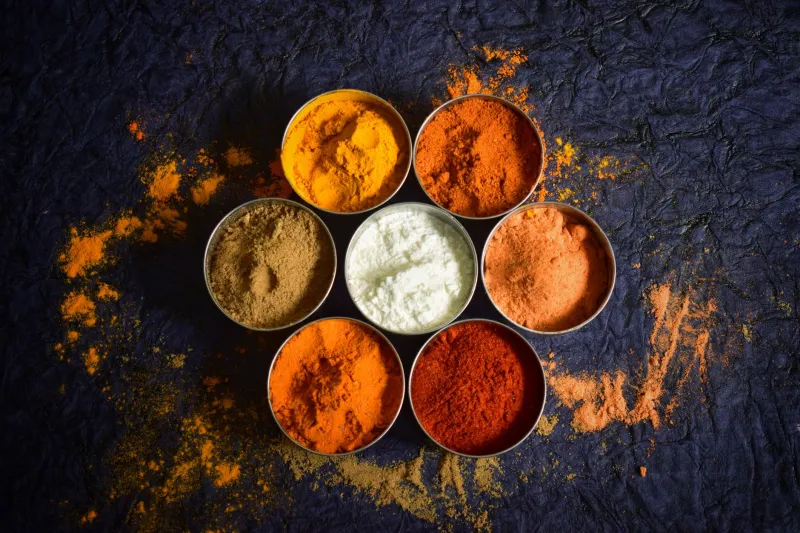
If you grew up in a Tamil, Telugu, Kannada, or Malayali household, the masala dabba needs no explanation. It's a round stainless steel tin — usually with seven smaller compartments inside — that sits on the counter, always within arm's reach. It holds the spices you reach for every single day. Not the whole pantry. Just the essentials.
The specific contents vary by region and family, but the concept is the same: curated, accessible, and deeply personal. It's the opposite of a disorganized spice drawer. It's a philosophy.
Preeti Krishnamurthy, who grew up in Chennai and now lives outside Atlanta, describes her dabba as "basically muscle memory." She can reach into it without looking. "My mother's had the same seven spices in hers for forty years," she says. "Mine is a little different because I cook more Chettinad stuff than she does, but the idea is identical."
Why Americans Are Getting Into It
The interest in building a proper South Indian spice collection in the US isn't coming exclusively from Indian-American households — though they're certainly leading the charge. Food-curious Americans who've fallen hard for dosas, idli, and the particular brightness of a well-made rasam are starting to ask the obvious question: how do I actually make this at home?
The answer, almost always, starts with the spice shelf.
Jamie Okonkwo, a food writer based in Austin who has no South Indian heritage but spent two years cooking her way through regional Indian cuisine, says the shift happened when she stopped treating Indian cooking as a monolith. "Once I understood that South Indian food has its own logic — that it relies heavily on mustard seeds and curry leaves and dried red chilies in a way that North Indian cooking really doesn't — everything clicked. I rebuilt my spice situation from scratch."
She now keeps a dedicated shelf just for South Indian cooking, separate from everything else in her kitchen.
The Core Seven: What Belongs in a South Indian Masala Dabba
Every household will debate this list. That's part of the fun. But if you're starting from zero and want a foundation that covers the widest range of South Indian dishes, these are the spices most commonly cited:
Black mustard seeds. The heartbeat of South Indian tempering. These go into hot oil first, and when they pop, you know the cooking has officially begun.
Cumin seeds. Used alongside mustard seeds in many dishes, and essential for dals and chutneys.
Dried red chilies. Not for straight heat alone — they add a smokiness and depth that fresh chilies can't replicate in tempering.
Urad dal (split black lentils). Yes, a lentil in the spice box. In South Indian cooking, urad dal is toasted in oil at the start of many dishes to add nuttiness. It belongs here.
Turmeric. Ground, always. Anti-inflammatory, golden, and non-negotiable.
Asafoetida (hing). The most polarizing entry on this list for newcomers — it smells aggressive straight from the jar — but it transforms when it hits hot oil. Adds an onion-garlic depth that's uniquely South Indian.
Curry leaves. Technically fresh, not dried, but so central to South Indian cooking that any honest list has to include them. Find them at Indian grocery stores. Use them liberally. Freeze a big batch.
Sourcing Without Stress: Where to Actually Find These
Here's the practical part. Indian grocery stores remain the best single source for all of these — the quality is higher, the prices are dramatically lower than mainstream grocery stores, and you'll find regional varieties you simply won't see elsewhere. Chains like Patel Brothers and India Bazaar have locations across major US metros, and most mid-sized cities have at least one independent Indian grocer.
For those without easy local access, online options have improved significantly. Websites specializing in South Asian groceries ship nationally, and the spice quality from dedicated importers tends to be excellent. Amazon carries many of these items too, though it's worth reading seller reviews carefully for spices.
One tip from experienced cooks: buy smaller quantities more frequently rather than stocking up. Spices lose potency faster than most people realize, and fresh mustard seeds behave very differently from ones that have been sitting in a jar for two years.
How the Collection Evolves
The beginner's dabba is just the starting point. As cooks get more comfortable, the collection naturally expands — fenugreek seeds for sambar powder, coriander seeds for grinding fresh, black pepper for rasam, stone flower (kalpasi) for Chettinad dishes, and on and on.
Raj Venkataraman, who moved from Bangalore to Chicago fifteen years ago, says his spice collection has become a kind of autobiography. "When I first got here, I was just trying to make the basics. Now I have stuff in my pantry that I couldn't even find easily in the US ten years ago. The access has gotten so much better."
His current setup: a traditional stainless steel dabba for daily spices, a secondary container for whole spices he toasts and grinds himself, and a dedicated freezer bag for curry leaves and fresh coconut.
The Bigger Point
Building a proper South Indian spice kit isn't about gatekeeping or complexity — it's actually the opposite. When you have the right ingredients in front of you, South Indian cooking becomes faster, more intuitive, and more rewarding. The dishes that seemed intimidating start to feel like a reasonable Tuesday dinner.
The masala dabba is, at its core, a tool for lowering the barrier. It sits on the counter because it gets used every day. It's curated because every ingredient earns its place. And once yours is stocked and within arm's reach, the gap between craving a bowl of rasam and actually having one gets a whole lot smaller.