Same Country, Wildly Different Plates: Why South Indian Restaurants Are Going Hyperlocal — and Why That Changes Everything
The Menu That Tried to Do Everything — and Ended Up Doing Nothing
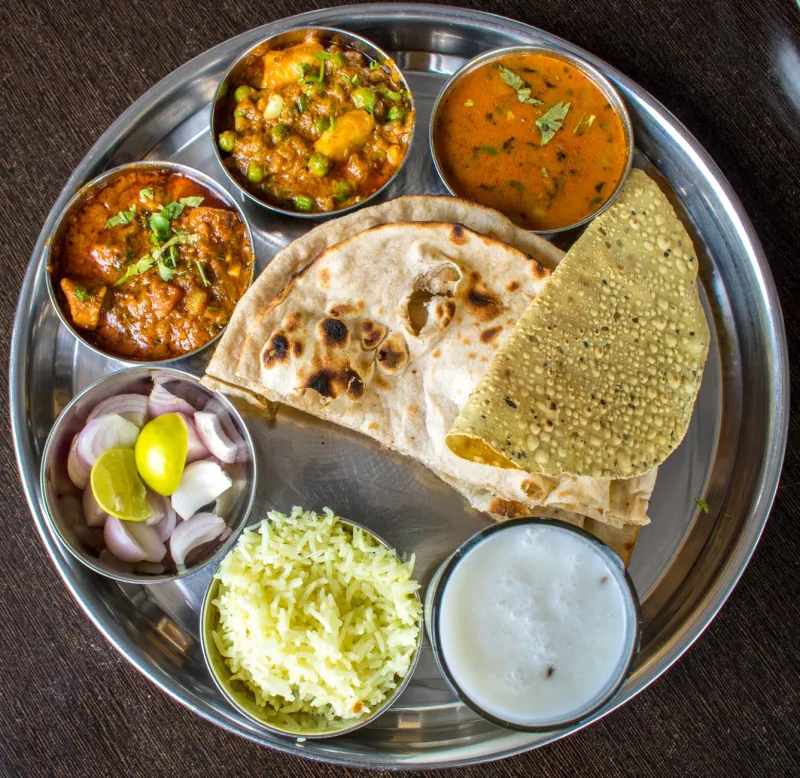
For a long time, walking into a South Indian restaurant in America meant encountering the same reliable lineup: dosa, idli, sambar, a few rice plates, maybe a vada or two. It was safe. It was familiar. And for diners who didn't know the difference between Tamil Nadu and Kerala — which, honestly, is most of America — it worked fine.
But restaurant owners knew the truth. That menu was a compression. A greatest-hits album stripped of everything that made the originals interesting. Chettinad cuisine, one of the most complex and aromatic food traditions on the subcontinent, got reduced to a single "spicy chicken" line item. Malabar's extraordinary fish curries — built on a completely different flavor architecture than anything coming out of Chennai — were either absent or lumped in under a vague "Kerala special." The radical diversity of a region spanning five states and dozens of distinct culinary traditions was being flattened into something that could fit on a laminated two-page menu.
That's starting to change. And it's changing fast.
What "Hyperlocal" Actually Means in This Context
When chefs and restaurant owners in the South Indian food space talk about going hyperlocal, they're not talking about sourcing ingredients from nearby farms (though some do that too). They're talking about something more fundamental: organizing an entire restaurant concept around a single, specific regional food tradition rather than trying to represent "South India" as a monolith.
Think about what that actually means geographically. Chettinad, the region in Tamil Nadu that gave the world one of its most celebrated spice-forward cuisines, sits roughly 300 miles from Kozhikode (Calicut) on Kerala's Malabar Coast. That's about the distance from New York City to somewhere in North Carolina. And yet the food traditions that developed in those two places are so distinct — different spice philosophies, different protein preferences, different cooking techniques, different rice varieties — that a chef trained in one would be essentially starting from scratch in the other.
That's the story hyperlocal South Indian restaurants are trying to tell. Not "here is South Indian food." But rather: "here is this food, from this place, made this way."
The Chettinad Moment
If one regional cuisine is leading this charge in the American market, it's Chettinad. The food of the Nattukotai Chettiars — a merchant community from the Sivaganga district of Tamil Nadu — has always had a devoted following among food-obsessed diners who knew what to look for. But it's finding a much wider audience now, partly because its flavor profile is genuinely unlike anything else.
Chettinad cooking is built on a spice vocabulary that most American diners haven't encountered before: kalpasi (stone flower), marathi mokku (dried flower pods), star anise used in ways that diverge entirely from Chinese or Vietnamese applications. The heat isn't just chili heat — it's layered, fragrant, almost perfumed. A proper Chettinad chicken curry doesn't taste like any other Indian chicken curry. It tastes like itself.
Restaurants leaning into this specificity are finding that the education piece — explaining why this food is different, where it comes from, what makes the spice blend so distinctive — isn't a barrier to entry for American diners. It's actually a draw. People want the story. They want to feel like they're being let in on something.
Malabar and the Seafood Conversation America Wasn't Having
Malabar cuisine, rooted in the northern coastal regions of Kerala, represents a completely different kind of argument for regional specificity. Where Chettinad leads with spice complexity, Malabar leads with coconut — coconut oil, coconut milk, fresh grated coconut — and with seafood preparations that reflect centuries of Arab, Portuguese, and local Mappila Muslim culinary influence.
The Malabar fish biryani alone is worth building a restaurant concept around. It's not the same as Hyderabadi biryani. It's not the same as any biryani most American diners have tried. The rice is different, the technique is different, the spicing is different, and the fish — when it's done right — holds its own against the rice rather than disappearing into it.
For food delivery platforms, Malabar-specific menus are proving to be a genuine differentiator. In cities with established South Indian communities — the Bay Area, New Jersey, Houston, Atlanta — diners who grew up eating this food are actively searching for it. And diners who didn't grow up with it are increasingly curious, especially as food media starts paying more attention to the regional specificity that makes Indian cuisine one of the most complex food cultures on earth.
Why This Is a Competitive Advantage, Not Just a Philosophy
Here's the practical reality: the South Indian food delivery market in America is getting crowded. More restaurants, more ghost kitchens, more options on every major platform. In that environment, being "a South Indian restaurant" is not enough of an identity. Being "the Chettinad restaurant" or "the Malabar kitchen" is.
Specificity creates loyalty. When a diner finds a restaurant that does one regional tradition genuinely well — that sources the right ingredients, that doesn't substitute or approximate, that can explain the difference between a Chettinad kuzhambu and a standard Tamil gravy — that diner comes back. They tell people. They become advocates.
There's also something happening at the cultural level that's worth paying attention to. Second-generation Indian-Americans, many of whom grew up eating food from a specific state or community, are increasingly vocal about wanting that specificity represented in restaurants. They're not satisfied with a generic South Indian menu when they know what their grandmother's Malabar prawn curry actually tasted like. Restaurants that can meet that expectation are building a different kind of customer relationship — one that goes beyond convenience into something closer to cultural recognition.
What This Means for the Diner Who's Just Getting Started
If you're new to South Indian food, the hyperlocal shift might feel a little overwhelming at first. More specificity means more to learn. But here's the thing: it's actually easier to understand a cuisine when it's presented with context. When a menu tells you "this is Chettinad cooking, and here's what that means," you have a framework. You know what to expect, and you know what questions to ask.
The best regional South Indian restaurants in America right now are investing in that education — through menu descriptions, through staff knowledge, through the kind of storytelling that turns a meal into an experience rather than just a transaction.
At Srirangam Bhojnam, that philosophy is baked into everything we do. Authentic doesn't mean generic. It means specific, intentional, and rooted in a real place and a real tradition. The more American diners come to understand that South Indian food isn't one thing but many extraordinary things, the better the food gets — for everyone at the table.