Slow Down and Eat: How the Ancient Idea of Bhojnam Is Quietly Rewriting American Dining Culture
The Meal That Refuses to Be Rushed
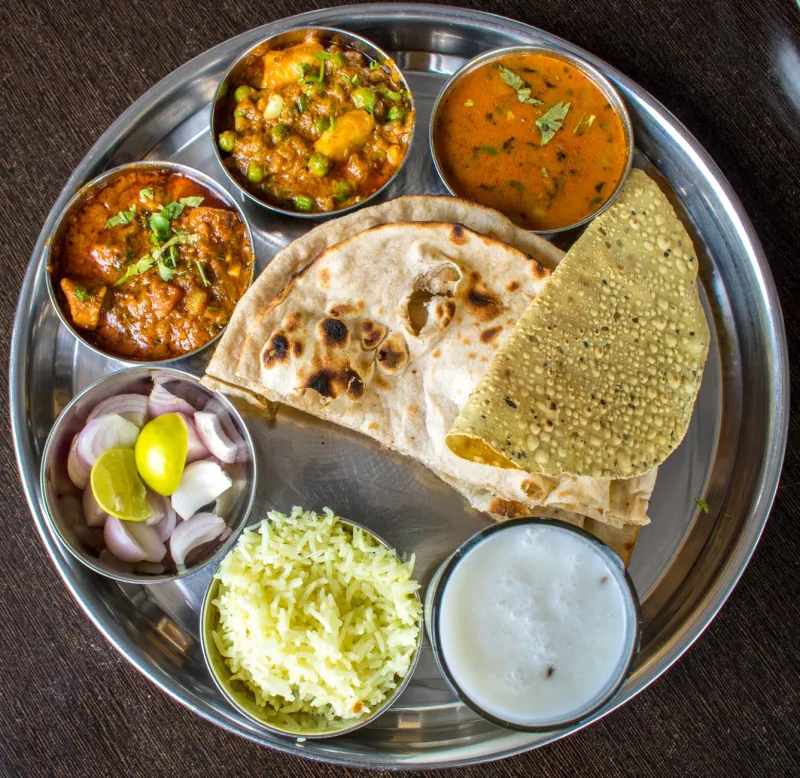
There's a moment that regular customers at certain South Indian restaurants across America describe almost identically, even when they've never met each other. It's the moment they stop reaching for their phone. The food arrives — maybe a banana leaf spread with rice, sambar, a couple of chutneys, some crispy papad — and something shifts. The noise of the day gets quieter. They actually taste what's in front of them.
That's not an accident. It's bhojnam.
The word itself is Sanskrit-rooted, broadly translated as a meal or act of eating, but its cultural weight runs much deeper than a dictionary entry. In South Indian tradition, bhojnam isn't just about food on a plate. It's about intention — in the cooking, in the serving, in the eating. It's the understanding that a meal prepared with care, from sourced ingredients and time-honored technique, is fundamentally different from one assembled for speed. And increasingly, American diners are starting to feel that difference in ways they can't quite articulate but absolutely don't want to give up.
Fast-Casual Fatigue Is Real
Let's be honest about where American dining culture has been heading. The last decade gave us build-your-own bowls, app-based ordering, contactless pickup windows, and the optimization of lunch into something that could be consumed at a standing desk in under eight minutes. Efficiency became the highest virtue at the table — or wherever the table used to be.
And for a while, it worked. People were busy. Convenience mattered. But somewhere along the way, a quiet exhaustion set in. Nutritionists started flagging what they called "disconnected eating" — the pattern of consuming calories without any real sensory engagement, which often leads to overeating, poor digestion, and a vague sense of dissatisfaction even after a full meal. Researchers studying the gut-brain connection began pointing to the pace of eating, not just the content, as a meaningful variable in digestive health.
Diners, meanwhile, were just tired of food that felt like a transaction.
What Bhojnam Restaurants Are Actually Doing Differently
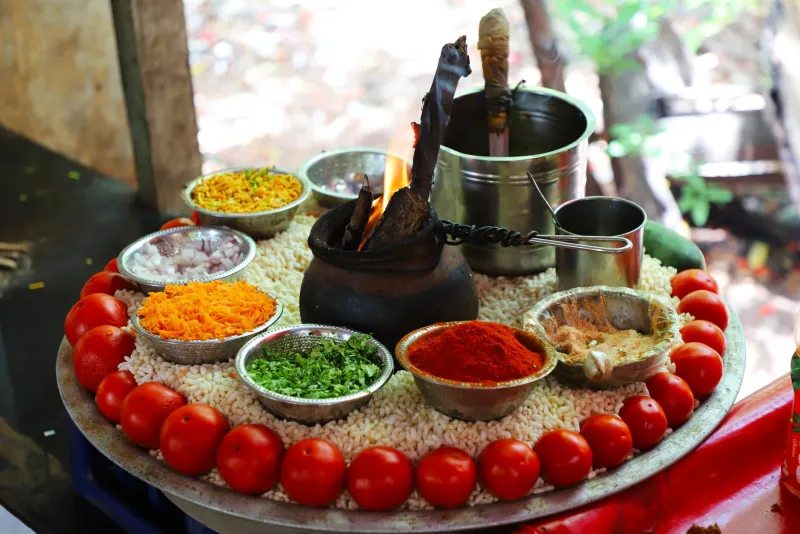
Walk into a South Indian restaurant that takes this philosophy seriously and you'll notice the differences before you even sit down. The menu isn't trying to be everything to everyone. There's a specificity to it — regional dishes you might not recognize, preparations that require explanation, ingredients with backstories.
The idli batter was soaked overnight. The sambar has been simmering since morning. The coconut chutney was ground fresh, not spooned from a jar. The rasam — that thin, peppery broth that South Indian grandmothers have been prescribing for colds and exhaustion for centuries — was made from a recipe that hasn't changed in three generations.
Restaurant owners who've built their menus around this approach talk about it in almost the same terms. The fermentation isn't a trend they adopted. It's just how the food is supposed to be made. The sourcing of ingredients — curry leaves, tamarind, specific varieties of lentils — isn't a marketing angle. It's what makes the dish taste right.
This kind of kitchen doesn't scale the same way a fast-casual chain does, and that's sort of the point.
The Loyalty Factor
Here's something interesting that keeps coming up when you talk to regulars at these restaurants: they don't just come back, they bring people. There's an almost evangelical quality to how customers describe discovering a bhojnam-style South Indian meal for the first time. They want their coworkers to try it. They want to bring their parents. They start talking about specific dishes the way people talk about travel experiences — as something that changed their frame of reference.
That kind of loyalty is hard to manufacture. You can't replicate it with a loyalty app or a punch card. It comes from the food itself doing something that most restaurant food simply doesn't do anymore: it makes people feel genuinely nourished.
Nutritional therapists who work with South Asian communities in the US have been noting this for years. The traditional South Indian plate — diverse, fermented, plant-forward, spiced with purpose — is almost a textbook example of what gut-health researchers now describe as a high-diversity, probiotic-rich diet. The fact that it also happens to be delicious and deeply comforting is not a coincidence. These are foods that were designed, over centuries of lived experience, to make people feel good.
Catering That Carries the Philosophy Forward
One of the most interesting ways the bhojnam philosophy is spreading in America isn't through restaurant dining at all — it's through catering. South Indian catering services that bring full banana-leaf meals to weddings, corporate events, and family gatherings are introducing the concept to people who might never have walked into a South Indian restaurant on their own.
And something about the communal format — everyone eating the same food, served the same way, often seated together — strips away the performative quality that's crept into a lot of American event dining. Nobody's photographing their individual customized bowl. They're just eating together. Talking. Passing the extra sambar.
That's bhojnam doing exactly what it was always meant to do.
Slow Doesn't Mean Inconvenient
One pushback that comes up sometimes is the assumption that embracing a slower food philosophy means accepting inconvenience. But that's a misread of what's actually happening. The restaurants and catering services leading this shift aren't asking you to spend three hours at a table or source obscure ingredients yourself. They're doing the slow work on their end — the fermentation, the sourcing, the long simmers — so that when the food reaches you, it's ready. It just also happens to be worth sitting down for.
The delivery model works the same way. A well-made South Indian meal, even when it arrives at your door, carries the intention of its preparation. You can taste the difference between batter that fermented properly and batter that didn't. You can tell when the tempering was done right, when the spices were fresh, when someone actually cared about what they were sending out.
What the Slow Food Movement Missed
The Slow Food movement, which started in Italy in the late 1980s as a direct response to fast food, got a lot right. But it also developed a reputation — sometimes fair, sometimes not — for being expensive, exclusive, and more interested in heritage grains than in feeding actual people.
What the bhojnam tradition brings to this conversation is something different: accessibility rooted in everyday practice. This was never elite food. It was temple food, family food, weekday food. The slowness wasn't a luxury; it was the method. The care wasn't a statement; it was just how cooking worked.
That's a distinction worth sitting with — preferably over a warm meal that someone made with patience and purpose.
Because at the end of the day, that's what bhojnam has always been about. Not a trend. Not a reaction. Just the simple, radical idea that eating well is worth a little time.