Rasam, Upma, and a Phone Propped Against the Spice Cabinet: How Young Indian-American Families Are Keeping South Indian Food Alive
Photo: Benjamin West, Public domain, via Wikimedia Commons
Sunita Krishnamurthy still has her mother's handwritten rasam recipe on a piece of notebook paper that's been folded and unfolded so many times the creases have started to tear. The ink has faded in places. Some of the measurements say things like "enough tamarind" and "mustard seeds until they jump." For years, the paper lived in a kitchen drawer in Sunita's apartment in suburban New Jersey, technically accessible but never actually used.
Then her daughter turned seven and asked why their house never smelled like Paati's house.
"That question just broke something open in me," Sunita says. "I realized I'd been so focused on making things easy — ordering delivery, making pasta, doing what was quick — that I'd let something really important just sit in a drawer."
She pulled out the recipe that weekend. She called her mother in Chennai at an hour that was inconvenient for both of them. She made rasam. It wasn't perfect. Her daughter said it tasted "kind of sour." She made it again the following Sunday. And the one after that.
The Inheritance Problem
Sunita's story is far from unique. Across the United States, a generation of Indian-Americans who grew up eating South Indian food at home — or at grandparents' homes during visits to India — are now parents themselves, and they're grappling with a specific kind of cultural anxiety.
They want their kids to know this food. Not just to eat it at a restaurant on special occasions, but to recognize it, to understand it, to eventually be able to make it. They want the smell of tempering mustard seeds in hot oil to mean something to their children the way it means something to them.
The challenge is that many of them never actually learned to cook it themselves.
"My mom made everything from memory," says Arjun Venkataraman, a software engineer in Seattle who grew up in a Tamil household in New Jersey. "I watched her cook my whole childhood but I never actually cooked with her. I thought I'd just absorb it somehow. You don't absorb it. You have to actually do it."
Arjun started learning to make upma about two years ago, after his son came home from a school potluck asking why their family never brought "the Indian food" that his friend's mom always brought. He found a YouTube channel run by a home cook in Chennai, made upma six times in a month, and now makes it every Saturday morning.
"My son still doesn't love it," he admits, laughing. "But he eats it. And he knows what it is. That feels like a win."
TikTok, YouTube, and the Digital Guru
For many second-generation Indian-Americans relearning their culinary roots, the internet has become an unlikely but essential bridge.
YouTube channels dedicated to South Indian home cooking — many of them run by grandmothers and middle-aged home cooks in India — have found devoted audiences among diaspora viewers in the US. The comment sections of these videos are filled with messages from Indian-Americans in their 30s and 40s saying things like "making this for my kids tonight" or "my mom used to make this exact version."
TikTok has added a faster, more shareable dimension to the same impulse. Short-form videos of uttapam being made on a cast-iron griddle, or the satisfying sizzle of a tadka hitting hot oil, have racked up surprising view counts — not just from South Asian viewers, but from curious non-Indian Americans who stumble across them and get hooked.
Priya Nair, a second-generation Keralite who lives in Atlanta and runs a small food account on Instagram, started posting her cooking videos primarily to document her own learning process. She didn't expect much of an audience.
"I was basically posting for myself and maybe my cousins," she says. "But then I started getting messages from other Indian-Americans who were like, 'I'm trying to do the same thing.' It became this community of people all kind of fumbling through the same recipes together."
The Kitchen as Classroom
What's particularly striking about this trend is that the cooking itself has become secondary to the connection it creates. Families talk about making uttapam or mixing idli batter together not primarily as a cooking lesson, but as time spent in a shared language.
Deepa Subramaniam, who lives in the Dallas suburbs with her husband and two kids, has a standing Saturday morning tradition of making dosas with her nine-year-old son. He's in charge of pouring the batter and spreading it on the griddle. She handles the heat.
"He's not going to remember every step right now," she says. "But he's going to remember standing in the kitchen with me on Saturday mornings. He's going to remember the smell and the sound of it. That's the part I want him to carry with him."
She pauses. "My mother-in-law says she used to do the exact same thing with her mother. The recipe changes a little every generation but the standing in the kitchen part stays the same."
Keeping It Real (and Imperfect)
One thing that comes up repeatedly in conversations with these families is a willingness to embrace imperfection — and to be honest with their kids about it.
Many second-generation cooks readily admit that their rasam doesn't taste exactly like their mother's. Their sambar is a work in progress. Their upma is sometimes too dry or not spiced quite right. And rather than hiding that, they're sharing it openly with their children.
"I think that's actually the most important thing," says Arjun. "My son sees me trying. He sees me calling my mom to ask questions. He sees me failing and trying again. That's the real lesson — not just how to make upma, but that this food is worth working at."
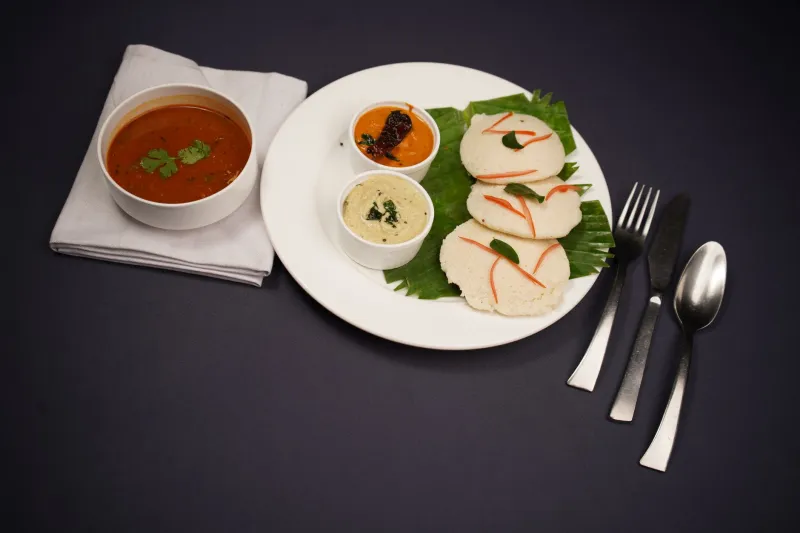
At Srirangam Bhojnam, we see this dynamic play out in a different way too. Families who order from us regularly tell us that our food fills a gap on the weeknights when there isn't time to cook — but that it also inspires them. A container of our sambar becomes a reference point. A side of coconut chutney becomes something to reverse-engineer on the weekend.
Food has always been one of the most durable ways that culture travels across time and distance. The fact that a new generation of Indian-American parents is actively, deliberately choosing to carry South Indian cooking forward — one imperfect dosa at a time — says something genuinely hopeful about what gets preserved and what gets passed on.
The notebook paper with the faded rasam recipe is still in Sunita's kitchen. But these days, it's on the counter, not in the drawer.