Two Hundred Pounds of Rice and One Very Long Friday: A Weekend in the Life of an American Wedding Caterer
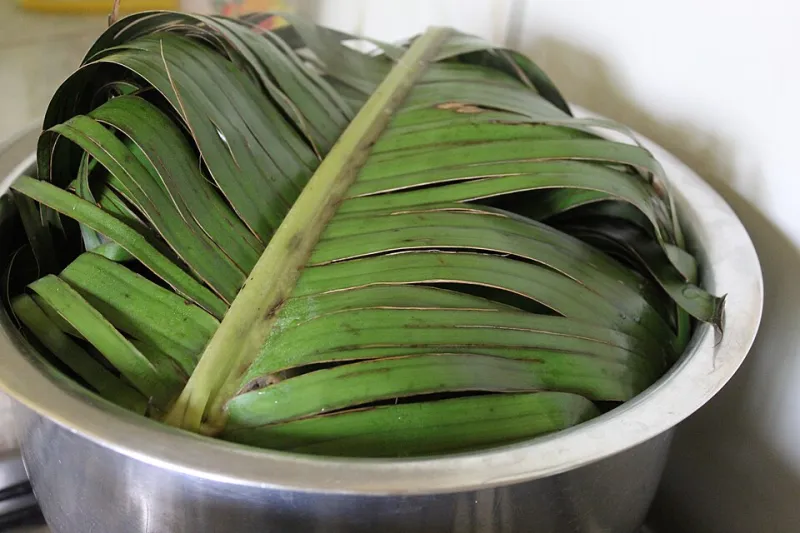
Photo: Cynthia Doresi, CC BY-SA 4.0, via Wikimedia Commons
The text comes in at 11:47 p.m. on Thursday: guest count is up from 280 to 310. Lakshmi Raman, who has catered South Indian weddings in New Jersey for sixteen years, replies with a thumbs-up emoji and adds 25 pounds of rice to Friday morning's order before going to bed.
"This is the easy part," she says. "The rice hasn't betrayed me yet."
Friday: The Logistics Phase
By 6 a.m. Friday, Raman is at her commercial kitchen in Edison, running through a checklist that reads like a military supply manifest. Two hundred pounds of ponni rice. Sixty pounds of toor dal. Coconuts by the case. Vegetables — drumsticks, ash gourd, carrots, beans — arriving from two different wholesalers because depending on one supplier before a wedding is, in her words, "how you learn humility."
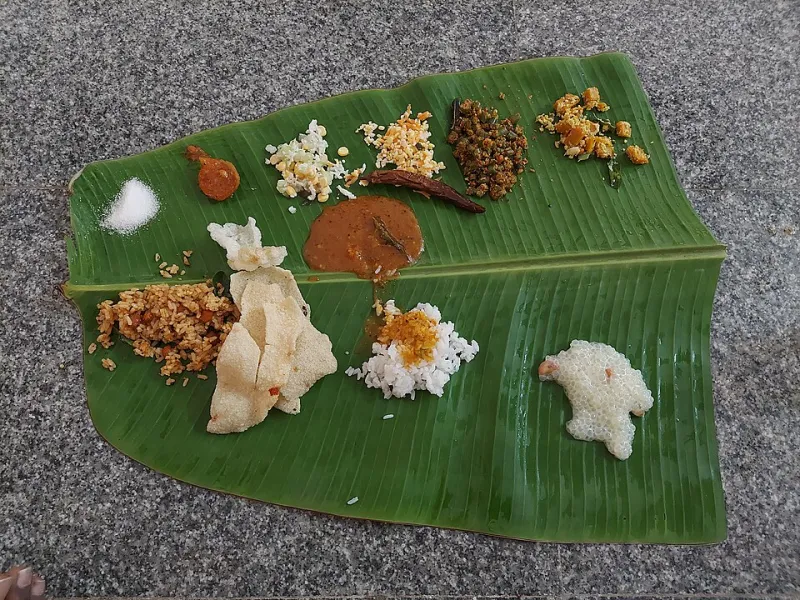
A South Indian wedding feast, served traditionally on a banana leaf, is a precisely choreographed sequence: a salt pinch, a range of vegetable poriyals and kootu, sambar, rasam, the celebratory payasam, rice, curd, and pickle, all arranged in a specific order on the leaf. When one caterer serves 300 people, that's 300 leaves placed in waves, refilled by servers who know exactly where the second spoonful of payasam goes.
The math gets staggering fast. A wedding weekend might mean 3,000 individual servings across multiple events — the mehndi lunch, the muhurtham breakfast, the reception dinner. Raman's team of twelve, plus twenty-plus servers hired for the weekend, works from laminated prep sheets she's refined over hundreds of events.
The Sambar Clock
Ask any large-scale Indian caterer what actually keeps them up at night, and it's not the volume. It's the timing.
"Sambar is a living thing," Raman says, half-joking. "You make it at 2 p.m. for a 7 p.m. dinner, and by 6 it's either perfect or it's thickened into paste. So you build it in stages. The dal cooks ahead. The tamarind base goes in late. The final tempering — mustard, curry leaves, hing in hot ghee — happens twenty minutes before doors."
Everything on the menu runs on a similar internal clock. Rice cooks in 60-pound batches in hotel-style steam kettles. Rasam, which turns dull if it sits, gets its final spice hit on-site. Curd rice is mixed at the venue, not the kitchen, so it stays cool and loose. Payasam, the sweet finale, is made with a longer horizon in mind because it only improves.
The Second Generation's Twist
Raman's parents catered weddings in Chennai; she grew up hauling vessels before she could drive. But her operation looks different from her mother's. There's a website with a tasting-menu booking form. There are allergen labels — nut-free payasam options, vegan sambar for the growing number of guests who ask. And there are the new clients: non-Indian couples who attended a friend's wedding, ate off a banana leaf, and decided they wanted that at their own reception.
"I had a couple in Princeton last fall, neither of them Indian," she says. "They told me, 'We went to a wedding in 2022 and we still think about the food.' That's becoming normal."
The banana leaf helps, she thinks. In an era of plated wedding chicken, a leaf is an experience — no utensils, a specific order of eating, a conversation piece built into the meal itself. It photographs beautifully, which in 2024 is its own form of marketing.
Saturday: Showtime
Saturday morning, two rented box trucks carry the kitchen to the venue. Raman's team arrives five hours before the ceremony ends. Electric ovens get wheeled in. A assembly line of leaf-laying begins — stacks of banana leaves, washed and trimmed, laid shoulder-width apart on long banquet tables.
When the guests flood in after the muhurtham, the serving rhythm kicks in. Servers move down the rows in sync, ladling in sequence. Raman stands at the pass, tasting sambar one last time, adjusting salt.
By 3 p.m., it's over. Three hundred leaves, cleared. The rice — all of it — gone, with just enough payasam left over for the crew.
"People ask how tradition survives at this scale," Raman says, finally sitting down with a plate of her own. "It survives because my mother's sambar recipe doesn't care if you're making it for six people or six hundred. The steps are the steps. You just get better at walking them."
She's already texting the next client. Guest count: 350. She orders 240 pounds of rice.