Coconut Was Never a Trend in South Indian Cooking — America Is Just Catching Up
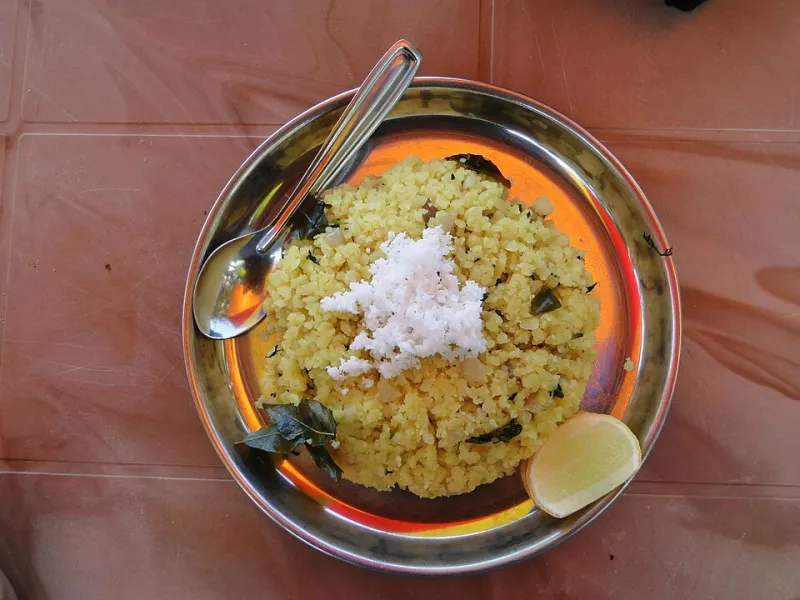
Photo: Ankur Panchbudhe from Pune, India, CC BY-SA 2.0, via Wikimedia Commons
Walk into any health food store in the US right now and you'll find an entire aisle dedicated to coconut. Coconut oil in glass jars with minimalist labels. Coconut milk in sleek cartons. Coconut aminos, coconut flour, coconut water in cans that cost four dollars. It's a full-on coconut economy, and Americans have enthusiastically bought in.
But here's the thing: none of this is new. Not even a little bit.
In South Indian cooking — the kind we celebrate every day at Srirangam Bhojnam — coconut isn't a wellness trend. It's infrastructure. It's the backbone of curries, the base of chutneys, the finishing touch on rice dishes, and the fat that makes everything taste like it was made with intention. Long before a single wellness blogger wrote the words "MCT oil," cooks in Kerala were pressing coconut oil from fresh-grated flesh. Long before anyone called it a "superfood," Tamil households were simmering coconut milk into rich, golden gravies that fed entire families.
So what happens when a centuries-old culinary tradition suddenly becomes a trend? It gets complicated.
What Coconut Actually Does in a South Indian Kitchen
To understand the gap between South Indian coconut use and American coconut culture, you first have to understand the scale and variety of how coconut shows up in traditional cooking.
Fresh coconut — grated, not processed — is the gold standard. It goes into chutneys alongside green chiles and roasted chana dal. It gets ground into the base of Kerala fish curries. It's toasted in a dry pan and stirred into rice dishes like coconut rice, where its nuttiness deepens with heat. Fresh coconut has moisture, texture, and a subtle sweetness that no packaged product fully replicates.
Coconut milk, extracted by squeezing grated coconut flesh with water, is another animal entirely. The first press — thick, almost cream-like — goes into stews and gravies. The second and third presses, thinner and lighter, are used to cook down sauces or thin out a dish at the end. This graduated use of coconut milk is a technique rooted in understanding the ingredient at a molecular level, even if no one in the kitchen was calling it that.
And then there's coconut oil. In South India, particularly in Kerala, coconut oil isn't just a cooking fat — it's a cultural marker. It has a distinct, slightly grassy aroma that signals home. It's used for tempering mustard seeds and curry leaves, for frying fish, for drizzling over cooked rice. The flavor is intentional and irreplaceable.
The American Coconut Moment — And What It Misses
When coconut oil went mainstream in the US around 2012, the framing was almost entirely about health. Saturated fat was being rehabilitated. MCT (medium-chain triglyceride) content was cited as a metabolic advantage. Paleo and keto communities latched on hard. Suddenly, refined coconut oil — stripped of its aroma, its character, its entire personality — was being used to sauté vegetables by people who had never cooked with it before.
The problem isn't that Americans started using coconut oil. The problem is that the version most of them are using is a shadow of the real thing. Refined coconut oil has no smell, no taste, none of the aromatic compounds that make virgin coconut oil worth reaching for. It's the culinary equivalent of buying a concert ticket and listening to the show from the parking lot.
Coconut milk in cans is better — and it's genuinely useful for home cooks trying to make South Indian dishes. But even here, there's a spectrum. Many commercial brands add guar gum or other stabilizers, and the fat-to-water ratio varies wildly between brands. In a traditional kitchen, you'd adjust consistency on the fly. With a can, you're working with whatever you got.
None of this is to say American pantries are hopeless. They're not. But there's a real difference between coconut as a health supplement and coconut as a culinary tradition.
The Sustainability Question Nobody Wants to Ask
Here's where things get genuinely complicated. The American appetite for coconut products has surged dramatically over the past decade, and that demand has real consequences for the places where coconuts are grown — Southeast Asia, South Asia, and parts of Latin America.
In South India, coconut trees are often grown on small family plots. A single tree can produce fruit for decades. The relationship between grower and tree is slow, multigenerational, and sustainable by design. But as global demand has scaled up, larger industrial operations have moved in, and labor practices in some coconut-producing regions have come under scrutiny.
For American consumers who care about where their food comes from — and many do — this is worth paying attention to. Choosing fair-trade certified coconut products, buying from brands that are transparent about their supply chains, or sourcing fresh coconut from local Indian grocery stores (where it often comes from smaller importers) are all meaningful choices.
What Authentic South Indian Coconut Cooking Looks Like
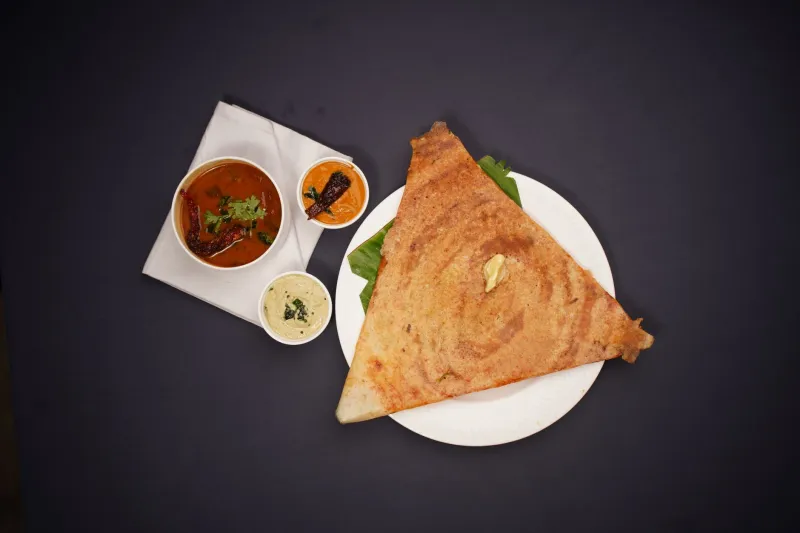
At Srirangam Bhojnam, coconut shows up the way it's supposed to — as an ingredient, not a headline. Our coconut chutney is made fresh, with grated coconut, roasted chana dal, green chiles, ginger, and a tempering of mustard seeds and curry leaves in — yes — real coconut oil. It's served alongside idli and dosa because that combination has been tested and refined over hundreds of years.
Our curries use coconut milk in layers, building richness without heaviness. The goal isn't to showcase coconut as a wellness ingredient. The goal is a dish that tastes right.
That's the distinction worth holding onto. In South Indian cooking, coconut earns its place through flavor, function, and cultural continuity. In the American wellness market, it often earns its place through a nutrition label.
Both things can coexist. But if you want to understand what coconut is really capable of, skip the MCT oil drops in your coffee and try a proper coconut chutney instead. The tradition got there first.