From Amma's Kitchen to a Real Business: The South Indian Women Feeding America
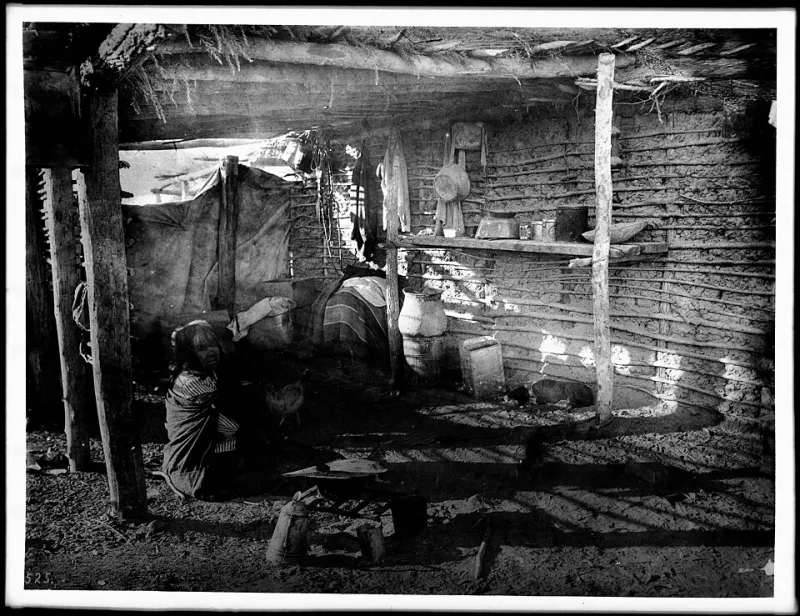
Photo: Pierce, C.C. (Charles C.), 1861-1946, Public domain, via Wikimedia Commons
Lakshmi Venkataraman didn't set out to start a catering company. She just kept getting asked to bring her tamarind rice to every potluck in her Fremont, California neighborhood — and eventually someone offered to pay her for it.
That was 2019. Today, her business, which she runs with her sister-in-law, serves weekend catering clients across the Bay Area, handles corporate lunch orders twice a week, and has a waitlist for her monthly meal prep boxes. She laughs when she talks about the beginning. "My husband kept saying, 'You should charge people.' And I kept saying, 'No, no, it's just food.' But it was never just food. It was years of learning, of watching my mother-in-law, of adjusting and tasting and adjusting again."
Lakshmi's story isn't unique. Across the country — in suburbs outside Dallas, in apartment complexes in New Jersey, in quiet neighborhoods in Atlanta and Columbus and Seattle — South Indian women are building food businesses from the ground up, often starting from nothing more than a well-worn recipe notebook and a reputation for cooking that makes people close their eyes when they take the first bite.
The Knowledge That Doesn't Come From Cookbooks
There's a particular kind of culinary knowledge that gets passed down in South Indian households, and it doesn't translate easily to a written recipe. It lives in the way you know when the mustard seeds have spluttered long enough before adding the curry leaves. It's the instinct for how long to ferment dosa batter on a cold Chicago night versus a warm Houston afternoon. It's understanding that the same sambar base tastes completely different depending on whether you finish it with coconut or leave it without.
This embodied, experiential knowledge — learned at the elbow of mothers and grandmothers, refined over decades of daily cooking — turns out to be a remarkable competitive advantage in a food economy that's increasingly hungry for authenticity.
"People can taste the difference between food that was made by someone who grew up eating it and food that was made by someone who learned it from YouTube," says Anitha Krishnamurthy, who runs a South Indian meal prep service in the Chicago suburbs and delivers to about 60 households weekly. "I'm not saying one is better than the other, but there's a depth of flavor that comes from a lifetime of context. That's what I'm selling — that context."
Starting Small, Scaling Smart
Most of these businesses start the same way: quietly, informally, almost accidentally. A neighbor asks if you can make a tiffin box for her parents who just arrived from Chennai. A coworker tastes your lunch and asks if you'd ever consider making extra. A Facebook post in a local Indian community group gets more responses than you expected.
The path from informal cooking to licensed food business varies significantly by state — cottage food laws, commercial kitchen requirements, and health department regulations differ widely — but the women navigating this space have largely figured it out through community and peer knowledge-sharing. Online groups for Indian home cooks and entrepreneurs have become informal support networks where women share which states have the most favorable cottage food laws, how to price catering jobs, and where to find bulk quantities of curry leaves and drumstick (moringa) pods.
Meenakshi Sundaram, who started a South Indian catering business in the Dallas-Fort Worth area after her youngest child started school, describes the learning curve as steep but manageable. "The cooking part I knew. The business part — pricing, invoicing, managing expectations, saying no to jobs that aren't profitable — that took time. I made mistakes. I undercharged for the first year. But the community helped. Other women who'd been through it were incredibly generous with what they knew."
The Challenges Nobody Warns You About
Running a food business is hard for anyone. Running one as a South Indian woman in America comes with a specific set of additional pressures that don't always get acknowledged.
There's the cultural expectation, for starters. In many South Indian families, cooking is still seen primarily as an expression of care and duty rather than a marketable skill. The idea of charging money for food you make at home can feel, to some family members, like a category error. Several entrepreneurs we spoke to mentioned navigating family skepticism — not hostility, exactly, but a kind of gentle confusion about why you'd want to turn something so personal into a transaction.
There's also the challenge of market positioning. South Indian food, for all its growing visibility, is still frequently lumped together with a generic idea of "Indian food" in the American market — which tends to mean North Indian dishes like butter chicken and naan. Educating potential customers about what makes South Indian cooking distinct (the coconut, the tamarind, the rice-based dishes, the temple-style cooking traditions) is a marketing challenge that comes before you even get to the food itself.
"I spend a lot of time explaining," says Divya Raghunathan, who runs a catering and meal delivery service in the New Jersey suburbs and specializes in traditional Tamil Brahmin cooking. "Not complaining — I love talking about the food. But I have to explain that no, there's no cream in this. No, it's not spicy the way you might expect. Yes, it's vegetarian, and yes, it's still incredibly satisfying. That education takes energy."
And then there's the visibility gap. Food media in America — the glossy magazine features, the James Beard nominations, the Food Network slots — has historically been slow to recognize South Indian cuisine as a serious culinary tradition worthy of attention. That's changing, but slowly, and the women building businesses in this space are largely doing so without the amplification that comes from mainstream food media recognition.
The Advantage of Authenticity
For all the challenges, there's something genuinely exciting happening in this space — and it's not just the food itself. It's the fact that these women are building businesses on a foundation that's almost impossible to replicate at scale.
Large food companies can produce a passable tikka masala. They can make a serviceable dosa batter. What they can't do is replicate the specificity of a home cook who learned to make rasam from her grandmother in Thanjavur, who knows exactly which variety of tomatoes to use and precisely when to add the black pepper, who has spent thirty years adjusting the recipe to her own taste and her family's preferences.
That specificity — that thisness — is what customers are increasingly willing to pay for. In a food landscape saturated with options, genuine is the rarest ingredient.
At Srirangam Bhojnam, we see this every day. The customers who seek out truly authentic South Indian food aren't just looking for something to eat. They're looking for a connection to something real — a cuisine with history, with intention, with the kind of care that you can actually taste.
What the Future Looks Like
The women building these businesses aren't waiting for the food world to catch up to them. They're creating their own platforms, their own audiences, their own definitions of success.
Some are growing into full catering operations with commercial kitchen space and part-time staff. Others are deliberately staying small — a manageable number of weekly meal prep clients, a handful of weekend catering jobs per month — because that scale fits their lives and their values. A few are experimenting with pop-up dinners and supper clubs, creating immersive experiences around South Indian food that go well beyond a takeout container.
What they share is a conviction that the food they grew up eating, the food they learned to cook in the kitchens of the women who came before them, is worth sharing — and worth building a livelihood around.
Lakshmi, back in Fremont, puts it simply: "My mother never thought of herself as a chef. She just cooked. But she was one of the best cooks I've ever known. I'm just trying to honor that. And if I can make a living doing it? That feels like a miracle."
It doesn't feel like a miracle to us. It feels like exactly what it is: extraordinary skill meeting a market that's finally ready to recognize it.