Meet the Masala Dabba: The Centuries-Old Spice System That's About to Change How You Cook Forever
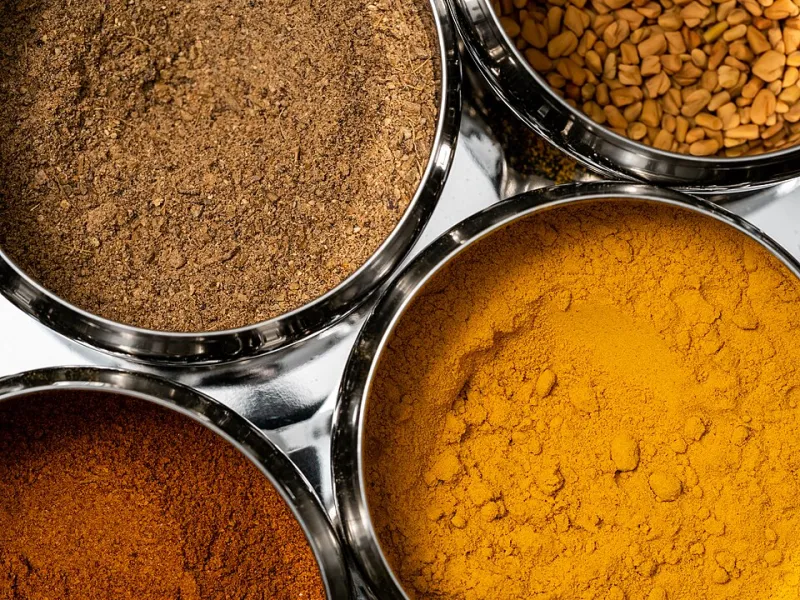
Photo: Ajay Suresh from New York, NY, USA, CC BY 2.0, via Wikimedia Commons
Somewhere in your kitchen, there's a graveyard. You know the one — a cabinet or a drawer stuffed with half-used spice jars, some of them dating back to the Obama administration. There's a dusty bottle of smoked paprika you bought for one recipe. A container of "Italian seasoning" you haven't touched in two years. And somewhere buried in the back, a jar of turmeric you grabbed during a golden milk phase that didn't stick.
Now picture a different scenario. A single round tin, roughly the size of a dinner plate, sitting right next to the stove. Inside it, seven smaller cups arranged in a circle, each one holding a different spice. Every one of those spices is fresh, intentional, and used almost every single day. No digging, no hunting, no mystery jars.
That's the masala dabba. And once you understand what it's actually doing, you'll never look at your spice rack the same way again.
What Exactly Is a Masala Dabba?
The masala dabba — literally "spice box" in Hindi — is a stainless steel container that's been a fixture in South Indian kitchens for centuries. It typically holds seven individual cups nested inside a larger tin, each one dedicated to a specific spice or spice blend that gets used constantly in everyday cooking.
In a traditional South Indian home, the contents might include mustard seeds, cumin seeds, coriander powder, turmeric, red chili powder, asafoetida (hing), and urad dal or curry leaves. The exact lineup varies by region, family, and cooking style — but the philosophy stays the same. Every spice in that box earns its spot by being used regularly. Nothing sits there "just in case."
The dabba sits on the counter, not in a cabinet. It's a working tool, not a storage solution. That distinction matters more than it might seem.
Why the Western Spice Rack Isn't Working for You
American kitchens have been sold on the idea that more spices equal better cooking. Specialty grocery stores stock hundreds of options. Spice subscription boxes arrive monthly. And yet, most home cooks consistently reach for the same three or four flavors while everything else ages into irrelevance.
The problem isn't variety — it's organization. When spices live in alphabetical rows behind a cabinet door, they become abstract. Out of sight, out of mind, out of your cooking. You stop thinking about them as living ingredients with real flavor potential and start treating them as emergency backup supplies.
The masala dabba flips that entirely. By keeping a curated set of spices visible, accessible, and right next to the heat source, it trains you to cook intuitively. You start reaching for mustard seeds before the oil even heats up. You add a pinch of asafoetida without stopping to think about it. The spices stop being ingredients you add to a recipe and start being part of how you think about cooking.
The Philosophy Behind the Box
Here's what makes the masala dabba more than just a clever organizer: it encodes a whole cooking philosophy into a physical object.
South Indian cuisine — the tradition behind everything we do at Srirangam Bhojnam — is built on the concept of the tadka, or tempering. This is the technique of blooming whole spices in hot oil or ghee at the very start of cooking, coaxing out fat-soluble flavor compounds before anything else hits the pan. It's why South Indian food tastes so deep and layered even when the ingredient list is short.
The masala dabba is specifically designed for tadka cooking. The wide, shallow cups make it easy to pinch out whole mustard seeds or cumin with one hand while you manage the pan with the other. The single lid covers the whole box, keeping everything fresh without requiring you to open and close seven individual containers mid-cook. It's ergonomic wisdom that developed over centuries of actual kitchen use.
There's also a lesson in restraint built into the design. The cups are small. You can't hoard. You refill them regularly with fresh spices, which means you're constantly cycling through your supply instead of letting things go stale in the back of a cabinet.
Setting Up Your Own Masala Dabba
Getting started is simpler than you might think, and you don't need to commit to a full South Indian pantry overhaul on day one.
Start with the hardware. Stainless steel masala dabbas are widely available on Amazon and at Indian grocery stores across the US. Expect to spend anywhere from $15 to $40 depending on size and quality. Look for one with a tight-fitting inner lid and sturdy cups that don't rattle around.
Choose your seven. If you're cooking South Indian food — or want to start — a solid starter lineup looks like this:
- Mustard seeds (black): The foundation of virtually every tadka
- Cumin seeds: Earthy, warm, endlessly versatile
- Turmeric powder: Color, anti-inflammatory properties, and a subtle earthiness
- Red chili powder: Heat with depth — go for Kashmiri if you want color without too much fire
- Coriander powder: Citrusy and mellow, it rounds out sharper flavors
- Asafoetida (hing): Funky, pungent, and transformative in tiny amounts — don't skip it
- Urad dal or curry leaves: Depending on your style, either one adds incredible texture and aroma to a tadka
Keep it next to the stove. This is non-negotiable. The whole point of the dabba is proximity. If it lives in a cabinet, you've just bought yourself a fancy spice organizer. If it lives beside your burners, you've changed how you cook.
Refill often, refill small. Buy your spices in bulk from an Indian grocery store (dramatically cheaper and fresher than the supermarket aisle), but only fill each cup partway. Fresh spices, frequently restocked, will make a noticeable difference in your food.
What Changes When You Cook This Way
Home cooks who make the switch to masala dabba cooking consistently report the same thing: they stop following recipes so literally. When your most-used spices are right there in front of you, you start adding a pinch of this or a few seeds of that based on instinct rather than instruction. That's not recklessness — that's fluency.
You also start tasting differently. Once you've experienced what mustard seeds do when they pop in hot oil versus when they're added raw, you can't un-know it. The masala dabba teaches through repetition, and repetition builds the kind of cook who doesn't need a recipe to make something delicious.
At Srirangam Bhojnam, this philosophy is baked into every dish we make. The flavors you taste in our sambar, our chutneys, our rice dishes — they come from cooks who grew up reaching into a masala dabba before they could read a recipe. That muscle memory produces food that tastes genuinely different from anything assembled by the teaspoon.
The masala dabba isn't a trend. It's not a TikTok hack or a wellness product. It's a centuries-tested system for making cooking feel natural, efficient, and deeply satisfying — and American kitchens are only just beginning to figure that out.