Why Silicon Valley's Smartest Companies Are Swapping Catered Sushi for South Indian Tiffin
For years, the corporate lunch has been a kind of arms race. Kombucha on tap. Grain bowls with microgreens. Sushi platters that look gorgeous and disappear in twelve minutes. HR teams spend real money trying to signal that they care about employee wellbeing — and yet, by 2 p.m., half the office is raiding the vending machine anyway.
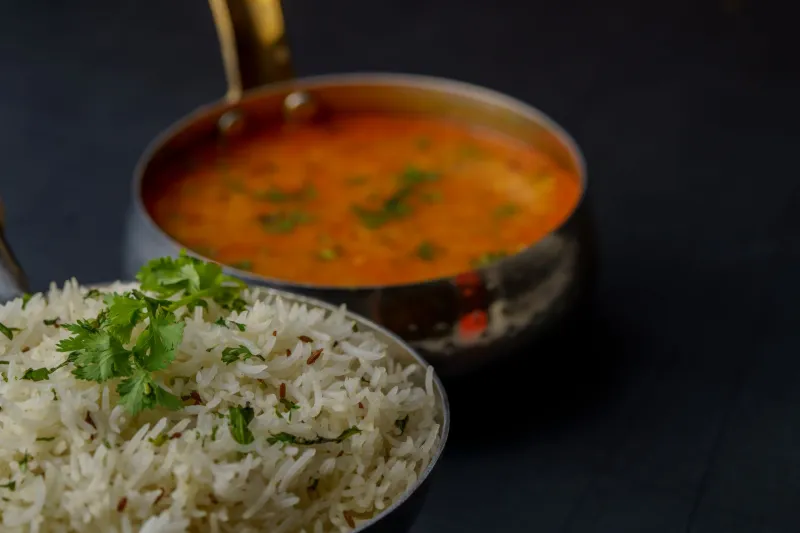
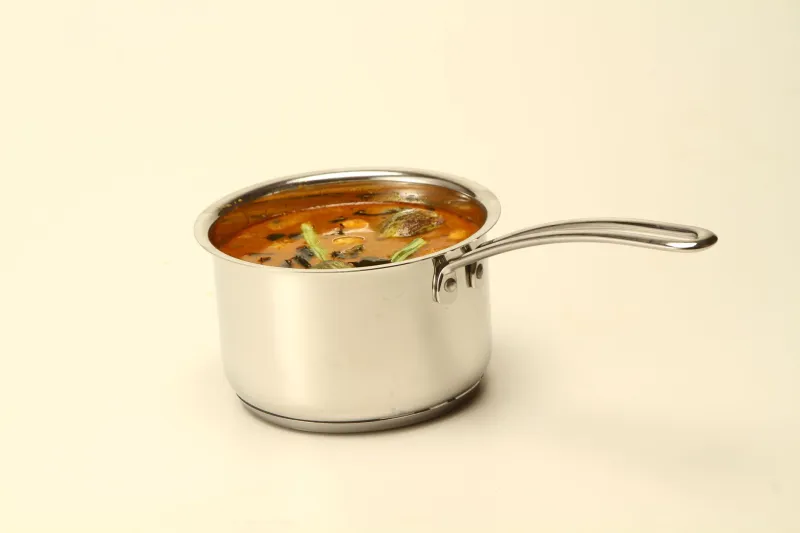
Something is shifting, though. Quietly, in office parks from Cupertino to Austin to Jersey City, a different kind of lunch is showing up. Compact stainless steel containers. Fragrant rice. A small cup of sambar. A portion of dry-spiced vegetables. A little something sweet tucked in the corner. South Indian tiffin — the same system of portioned, home-style meals that has fed millions across Tamil Nadu, Karnataka, and Kerala for generations — is finding a surprisingly enthusiastic audience in corporate America.
And it's not just a novelty. Companies are actively building tiffin catering into their wellness programming. Nutritionists are paying attention. And the people eating it? They keep ordering it back.
What Tiffin Actually Is (And Why It's Not Just a Lunch Box)
The word "tiffin" gets used loosely in the US, often to mean any Indian-style bento situation. But in the South Indian tradition, a tiffin service is something more deliberate. It's a complete meal system — typically built around a grain (rice or millet), a protein-rich lentil preparation like sambar or dal, one or two vegetable sides, a cooling element like curd or raita, and sometimes a small portion of something pickled or sweet.
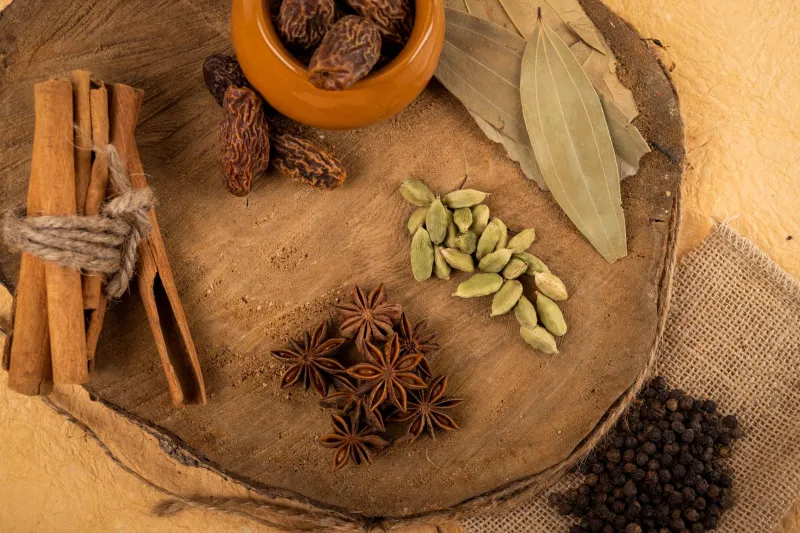
The balance isn't accidental. These meals were engineered over centuries to be nutritionally self-contained, easy to digest, and satisfying without being heavy. The spice combinations — turmeric, cumin, mustard seeds, curry leaves — aren't just flavor. They're functional. They aid digestion, reduce inflammation, and support gut health in ways that modern nutritional science is only recently catching up to document.
Priya Suresh, a registered dietitian based in the Bay Area who works with several tech companies on their food programming, puts it plainly: "What I love about a well-constructed South Indian tiffin is that it basically does the macro-balancing for you. You've got complex carbs, plant-based protein, healthy fats from coconut, fiber from the vegetables — and it's all in portions that don't leave you in a post-lunch fog."
The Dabbawala Model Meets the Gig Economy
The original dabbawala system — Mumbai's legendary lunchbox delivery network, famous for its near-perfect logistics — has been studied by Harvard Business School and admired by supply chain nerds worldwide. The South Indian version is less famous but equally practical: home cooks or small catering operations preparing fresh, daily meals and distributing them to subscribers.
In the US, that model has found fertile ground. Services like Chennai-based expat-run tiffin operations in the Bay Area, small catering outfits in cities like Houston, Atlanta, and Chicago, and newer delivery-integrated startups are all working some version of this playbook. The meals are typically prepared fresh each morning, packed into tiered stainless containers or eco-friendly compartmentalized boxes, and delivered in time for the lunch hour.
Ramesh Iyer runs a tiffin catering operation out of Sunnyvale that started as a side project feeding homesick South Indian engineers and has since expanded to serve three corporate accounts. "We started with maybe 20 individual subscribers," he says. "Then one of our customers mentioned it to his office manager. Now we're doing 150 boxes a day for companies, and we've got a waitlist."
What surprised him most wasn't the scale. It was who was ordering. "It's not just the Indian employees. We've got people from everywhere — American-born, Latin American, East Asian colleagues — all eating our food. They started curious and now they're regulars."
Corporate Wellness Gets a Reality Check
The corporate wellness industry in the US is enormous — valued at over $20 billion — and a huge chunk of that spending goes toward food-related benefits. But there's growing skepticism about whether catered lunches, snack walls, and meal stipends are actually moving the needle on employee health or just functioning as expensive perks.
South Indian tiffin catering is appealing to a different kind of corporate buyer: one who wants measurable nutritional value, reduced food waste (portioned meals mean less throwaway), and something that feels genuinely different from the usual catering rotation.
Jamie Torres, an office operations manager at a mid-sized fintech company in Austin, started piloting a weekly tiffin service after an employee survey flagged lunch options as a persistent pain point. "We'd done the usual stuff — sandwich trays, pizza Fridays, the occasional Thai spread. People were bored and honestly, a lot of it just wasn't that healthy," she says. "Someone suggested we try a South Indian tiffin service a colleague had used. We did a trial and the feedback was overwhelmingly positive. People loved that it was light but filling. Nobody was complaining about afternoon sluggishness."
Her company has since moved to a twice-weekly tiffin program. Food waste, she notes, dropped significantly compared to their previous catering setup.
It's Not Just About the Food
Here's the part that doesn't show up in wellness program metrics but might matter just as much: tiffin catering is creating a different kind of lunchtime culture in offices that adopt it.
Because the meals are portioned and often come with a small card explaining what's in each container — the name of the dish, the region it comes from, the spices used — they become conversation starters. People who might have eaten alone at their desks are suddenly asking each other, "What did you get today?" South Indian colleagues are sharing context. Non-Indian colleagues are discovering food traditions they'd never encountered.
Ramesh noticed this dynamic early. "We started including a little note about the dish — just a sentence or two. And people told us they were reading it. They were curious. It was turning lunch into something more than just eating."
For South Indian immigrants in particular, seeing their home cuisine treated with this kind of respect — not as a novelty or a fusion experiment, but as a complete, serious food system — carries its own significance. Food has always been one of the most direct routes to cultural recognition, and a tiffin landing on a conference room table is doing something that no diversity initiative pamphlet can quite replicate.
What to Look for in a Tiffin Catering Service
If you're thinking about exploring this for your office — or honestly, just for yourself — a few things are worth keeping in mind:
- Freshness is non-negotiable. Authentic tiffin is prepared the same day. If a service is working from frozen or pre-prepped bases, the texture and nutrition profile suffer.
- Rotation matters. A good tiffin service rotates its menu meaningfully — not just swapping one rice dish for another, but cycling through different regional preparations, proteins, and vegetable combinations.
- Ask about spice levels. South Indian food can range from very mild to genuinely spicy. Good catering services offer some customization or at least transparency about heat levels.
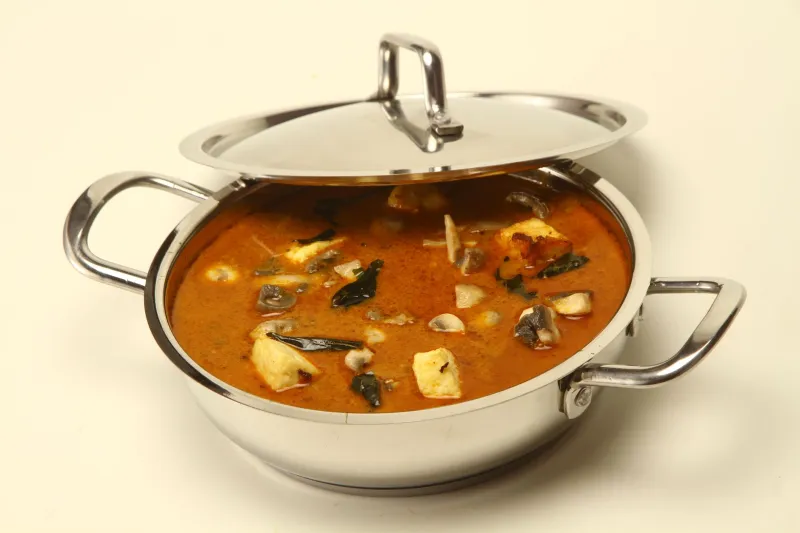
- Look for whole ingredients. The best tiffin operations are using whole spices, fresh curry leaves, real tamarind, and quality lentils — not pre-mixed powders for everything.
The Bigger Picture
What's happening with South Indian tiffin in American corporate spaces is a small but telling story about where food culture is heading. People are tired of food that performs wellness without delivering it. They want meals that are real — that come from somewhere, that mean something, that taste like someone actually cared about making them.
The tiffin has been doing exactly that for centuries. America is just now figuring out that it was onto something all along.