From Street Cart to Star Kitchen: Why America's Top Chefs Are Obsessed With Dosa Right Now
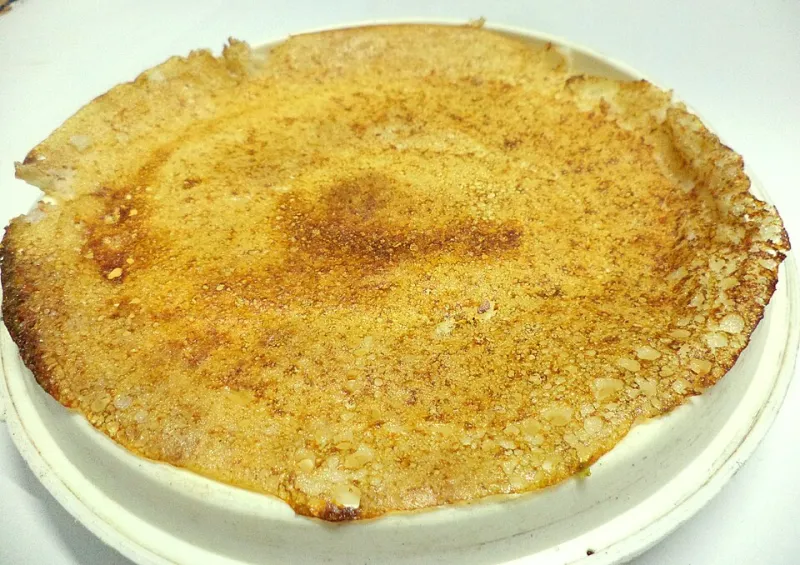
Photo: Devika, CC BY-SA 2.0, via Wikimedia Commons
There's a moment in every food trend where something shifts. Where a dish stops being "that thing from the restaurant in the ethnic neighborhood" and starts showing up on tasting menus, in food magazine spreads, and on the Instagram feeds of chefs who normally spend their days obsessing over French technique and Japanese knife work. Dosa just had that moment — and honestly, it was only a matter of time.
If you've grown up eating South Indian food, this is both vindicating and slightly amusing. You've known forever that a perfectly made dosa — paper-thin, lacquer-crispy at the edges, faintly sour from fermentation, wrapped around spiced potato or served plain alongside sambar and chutney — is one of the great eating experiences on the planet. No asterisk. No "for its category." Just great food, full stop.
But something has changed in the broader American food conversation. Dosa isn't being discovered so much as it's being recognized. And the people doing the recognizing are some serious names.
The Texture Thing Nobody Can Stop Talking About
Ask any chef why dosa has captured their attention and the first word out of their mouth is almost always "texture." It's an obsession in professional kitchens — that pursuit of contrast, of something that does more than one thing at once in your mouth. Dosa delivers this effortlessly.
The outer surface shatters like good caramel. The interior stays yielding and soft. The fermented batter carries a subtle tang that plays against rich fillings or bright chutneys. And all of that complexity comes from a batter made of just rice and lentils, left to ferment overnight. No additives, no shortcuts, no molecular gastronomy tricks required.
Chefs who've spent years chasing textural complexity through elaborate technique find themselves humbled by how much a traditional dosa achieves with so little. That humility tends to translate into genuine respect — and genuine curiosity.
Fine Dining Gets Curious
Over the past few years, dosa has started appearing in some unexpected places on the American dining scene. Not always in its traditional form — sometimes as a conceptual reference point, sometimes as a direct adaptation — but the influence is unmistakable.
Some chefs have leaned into dosa's natural versatility as a vessel, experimenting with fillings that bridge South Indian flavors and local American ingredients. Think roasted mushroom masala with truffle, or pulled short rib with tamarind glaze folded into a crispy dosa cone. Others have been more reverent, working to understand and replicate the fermentation process before they dare to riff on it.
What's notable is that the serious chefs — the ones worth paying attention to — almost universally start with the traditional version. They go to South Indian restaurants, they talk to aunties and grandmothers if they can, they study the batter ratios and the griddle temperatures. There's a growing understanding in the culinary world that you can't improvise on something you don't first understand deeply.
Food Critics Are Catching Up
The critical establishment has been slower to catch on, but the tide is turning. South Indian restaurants that have been quietly excellent for decades are finally getting the ink they deserve. Reviewers who once lumped all Indian food into a single undifferentiated category are starting to appreciate the distinct regional identity of South Indian cuisine — its emphasis on rice over wheat, its use of curry leaves and mustard seeds and tamarind in ways that bear no resemblance to North Indian cooking.
Dosa is often the entry point for these writers. It's approachable — no unfamiliar cutlery required, no complicated ordering ritual — but it rewards attention. The more you know, the more you taste. The difference between a dosa made from a well-fermented batter versus a shortcut version is enormous, and critics who train themselves to notice that difference tend to become evangelists.
Food publications that once ran a single annual "Indian food" roundup are now commissioning separate features on South Indian cuisine specifically. That's a meaningful shift.
What Makes a Great Dosa (And Why It's Harder Than It Looks)
Here's something the dosa hype cycle doesn't always make clear: a great dosa is genuinely difficult to make. The fermentation requires the right ambient temperature and humidity. The batter consistency needs to be exactly right — too thick and you lose the crispiness, too thin and it tears on the griddle. The tawa (the flat griddle used for cooking) needs to be properly seasoned and at the right heat. The spreading motion — that confident outward spiral — takes real practice.
At Srirangam Bhojnam, this is something we think about constantly. The dosas that come out of a kitchen where someone has been making them for twenty years are categorically different from the ones made by someone who learned from a YouTube video last month. That accumulated knowledge — the muscle memory, the sensory calibration, the intuition about when the batter is ready — is irreplaceable.
This is part of why the chef community's interest in dosa is so interesting to watch. Many of them are encountering, perhaps for the first time, a cuisine where the technique is so deeply embodied that it genuinely can't be fully learned from a recipe. That's humbling for people who are used to being able to master a dish through study and practice.
The Fermentation Connection
America's ongoing fermentation obsession has also played a role in dosa's rise. The same food culture that embraced sourdough, kimchi, and kombucha is primed to appreciate a batter that relies on wild fermentation for its flavor and its nutrition. The slight sourness of a well-fermented dosa batter isn't a flaw — it's the point. It's what makes dosa digestible, flavorful, and distinct from every other flatbread in the world.
Chefs who've gone deep on fermentation as a technique find dosa's approach elegant and ancient in the best possible way. There's no starter culture to maintain, no complicated process. Just rice, lentils, water, time, and the microorganisms naturally present in your kitchen. It's fermentation at its most democratic.
What This Moment Means for South Indian Food in America
The dosa moment feels significant because it's happening on South Indian food's own terms. This isn't a fusion trend where the original gets diluted into something unrecognizable. The chefs and critics driving this conversation are largely doing so out of genuine respect for the source material. They're learning, not just borrowing.
For South Indian communities in America who've watched their food get overlooked or misunderstood for generations, that respect matters. It's one thing to have your cuisine become trendy. It's another to have it become genuinely understood.
At Srirangam Bhojnam, we've always believed that South Indian food doesn't need to be reinvented to be relevant. It just needs to be made well and given the chance to speak for itself. Watching the broader American food world arrive at that same conclusion — one crispy, tangy, extraordinary dosa at a time — feels pretty good.
The dosa doesn't need a rebrand. It just needed the audience to catch up.